Murderers Among Us: Owen Hatherley Picks Over the ‘Rubble Films’ of Post-War East Germany
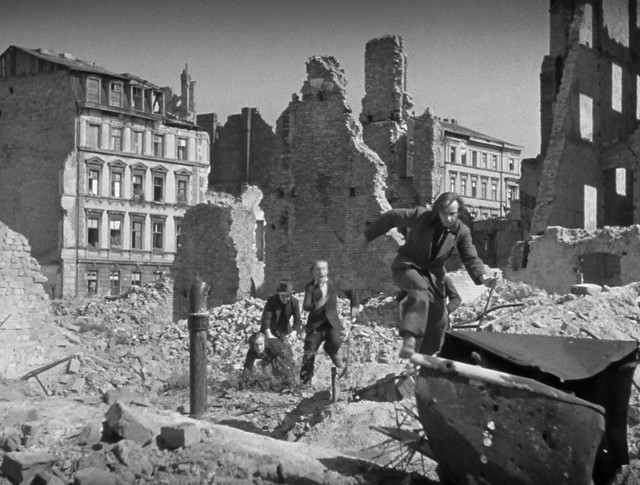
Owen Hatherley examines the overlooked cinematic traditions of post-war East Germany through a Eureka Entertainment boxset release featuring five archival films from DEFA, the state-owned studio. The essay positions this material within Germany’s broader film history, contrasting the expressionist and avant-garde achievements of Weimar cinema (1919-1933) with the cultural rupture caused by Nazism. Rather than examining Nazi-era output or the celebrated New German Cinema of the 1960s onward (Herzog, Fassbinder, Wenders), Hatherley focuses on the three-decade gap between 1933-1966, a largely unmapped period in film historiography. East German cinema’s brief golden age emerged in the mid-1960s with formally experimental works like Beyer’s Trace of Stones and Böttcher’s Born in ’45, yet these films faced rapid state suppression. The analysis situates DEFA’s lost cinema as a crucial but invisible parallel to Polish and Czech new waves, suggesting aesthetic and political sophistication obscured by historical defeat and competing Cold War narratives.
Original article published on The Quietus — AI-generated summary. Read the full article at the source.