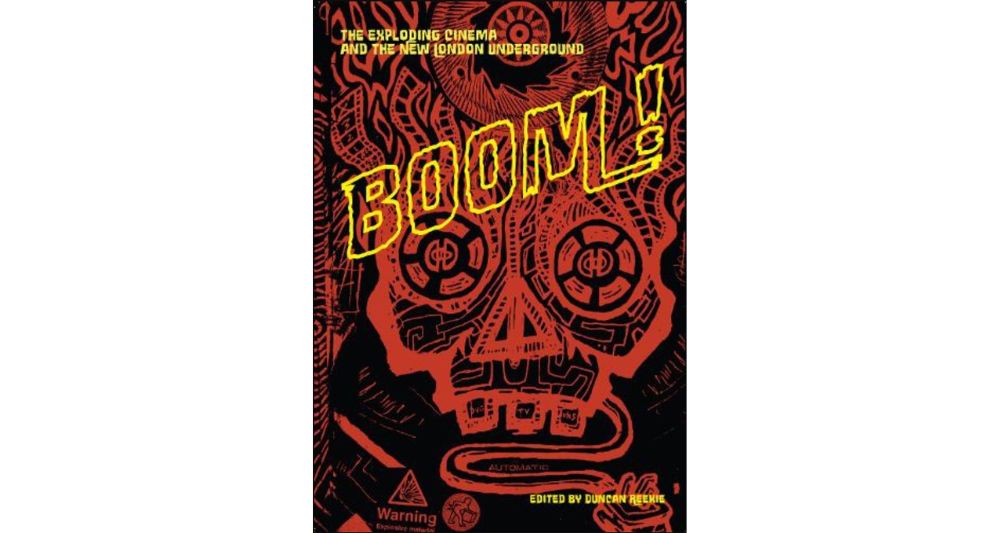
A Radical Resurgence from the Rubble: Duncan Reekie’s BOOM! The Exploding Cinema and the New London Underground
This essay examines Duncan Reekie’s monograph BOOM! The Exploding Cinema and the New London Underground, a non-linear chronicle of the Exploding Cinema collective that emerged in early 1990s London. Rather than adopting conventional academic structure, the book assembles testimonies, archival materials, and manifestos from three decades of collective members to document a grassroots resistance movement. Founded in 1991, Exploding Cinema operated counter to institutional gatekeeping by hosting open-access screenings in converted squats and disused factories across Brixton and beyond, embracing radical democratic principles that rejected curated taste hierarchies. The work situates this initiative within a broader underground film ecology that inherited the legacy of the Arts Lab while explicitly opposing both commercial mainstream and state-subsidized avant-garde frameworks. Through ephemeral documentation—hand-drawn flyers, grainy photographs of multi-projector events, visual propaganda—the book captures the lo-fi aesthetic and anarchic energy defining the era, tracing the movement’s evolution from analogue projection to digital formats while exploring its interconnected network of affiliated groups and the persistent tension between grassroots autonomy and institutional recognition.
Original article published on Senses of Cinema — AI-generated summary. Visit the website to read the full article at the source.