Artificial Intelligence: Ars Notoria and the Promise of Instant Knowledge
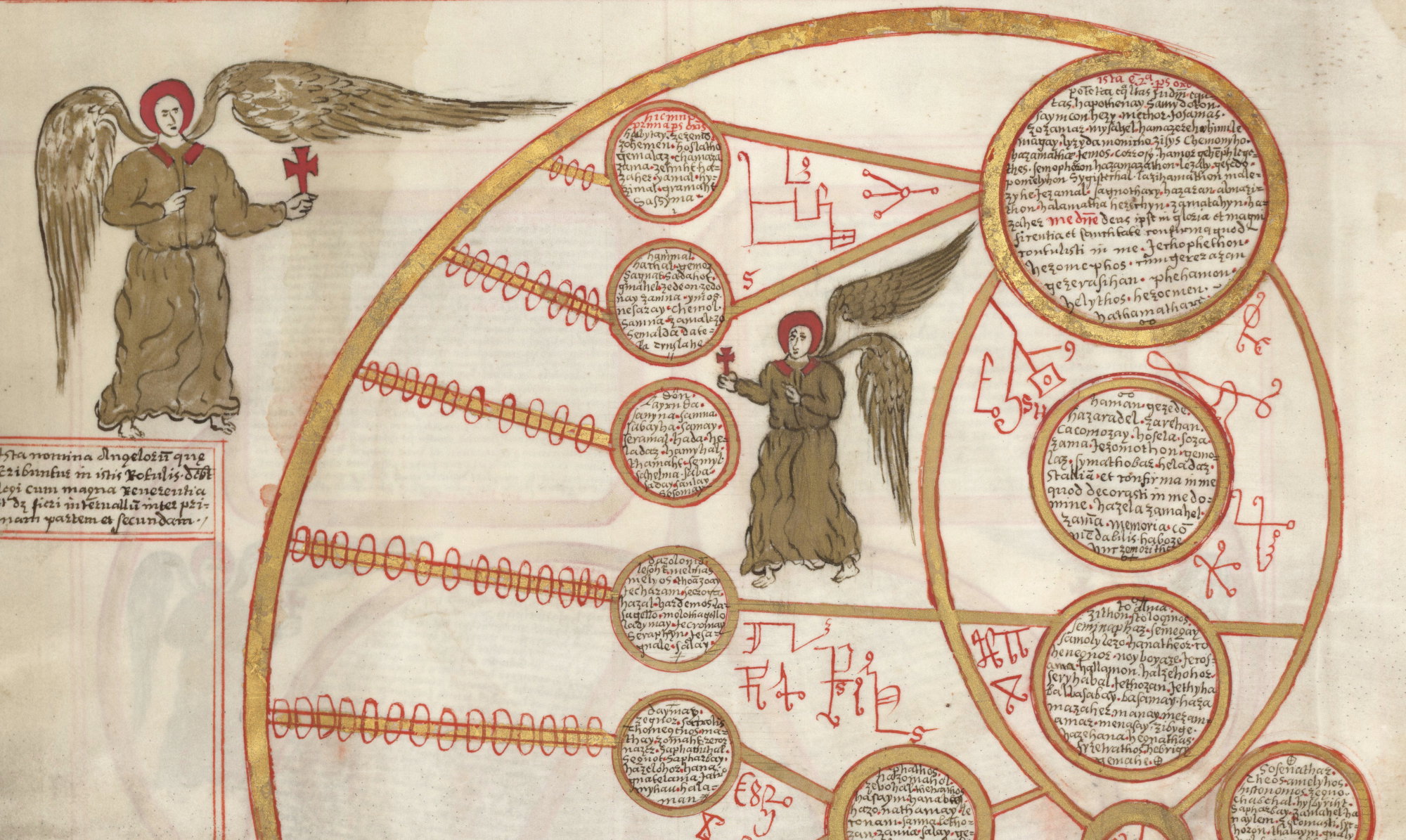
The Public Domain Review examines the Ars notoria, a medieval grimoire promising accelerated acquisition of scholarly knowledge through ritualistic engagement with complex geometric diagrams and arcane incantations. From the thirteenth century onward, this anonymous work circulated in fifty-six surviving manuscripts despite ecclesiastical condemnation. Unlike conventional magical texts, the Ars notoria’s labyrinthine diagrams functioned semiotically as devotional icons rather than instructional illustrations or templates for material objects. Practitioners contemplated intricate arrangements of symbolic forms, geometric patterns, and unintelligible letter-combinations while reciting elaborate verbal formulae and angelic names derived from classical and Hebraic linguistic sources. Church authorities disputed claims that the work transmitted divine wisdom through Solomon, viewing its practices as superstitious and demonic despite the text’s presentation of rituals as pious prayer. The manuscript tradition reveals the historical appeal of shortcut knowledge acquisition through esoteric visual and verbal codes.
Original article published on Public Domain Review — AI-generated summary. Visit the website to read the full article at the source. Image via Public Domain Review.