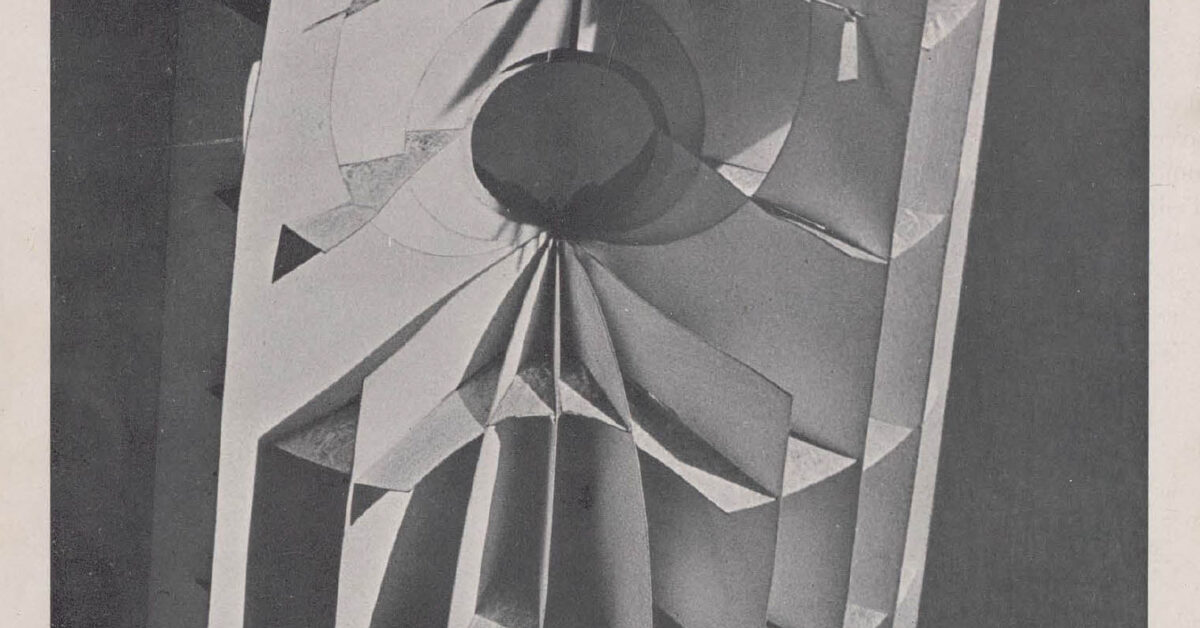
Man Ray, Mathematical Objects (1934-36)
Man Ray created a series of thirty-one photographs between 1934 and 1936 documenting nineteenth-century three-dimensional mathematical models housed at the Institut Henri Poincaré in Paris. These sculptural forms—constructed from wood, metal, wire, and plaster and representing algebraic and differential equations—captivated Surrealist circles after Max Ernst introduced them to Man Ray’s practice. The photographer’s engagement with these abstract geometric objects exemplifies the movement’s fascination with uncanny, scientifically-derived forms that transcended conventional representation, transforming mathematical abstraction into visually compelling and ontologically ambiguous imagery through the camera lens.
Original article published on Socks Studio — AI-generated summary. Visit the website to read the full article at the source. Image via Socks Studio.