Pulex irritans: The Attack of the Monster (1885)
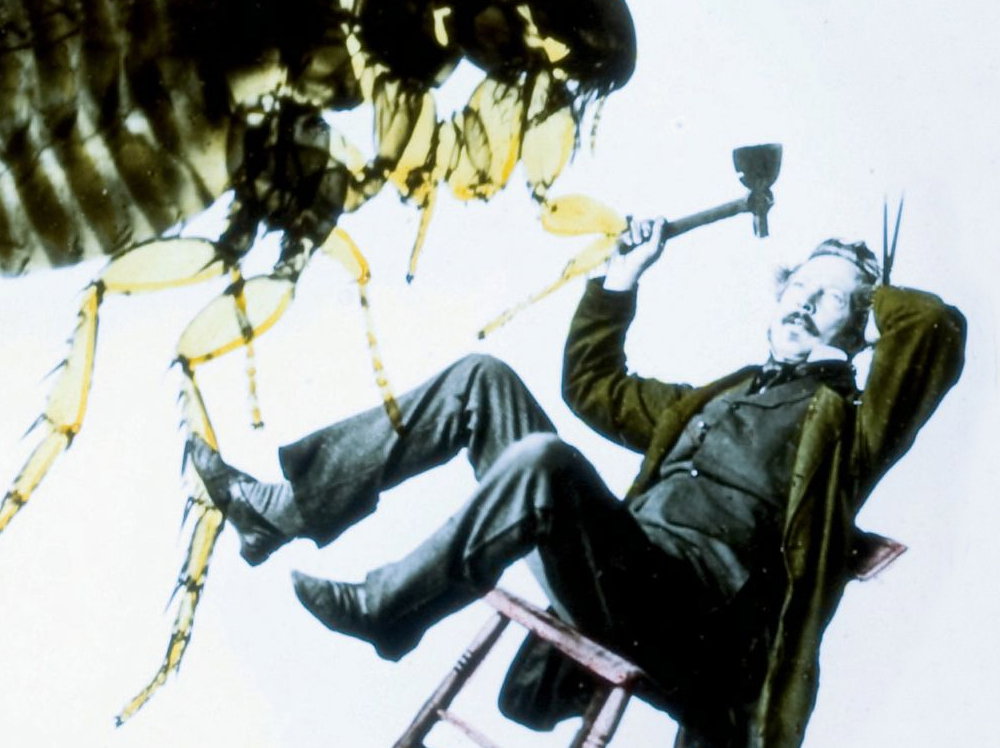
This essay examines ‘The Attack of the Monster’ (circa 1855), a glass lantern slide produced by Philadelphia’s W. & F. Langenheim studio depicting a man in formal dress wielding an ax against a grotesquely enlarged flea (Pulex irritans). The Langenheims, German immigrant brothers, pioneered the ‘hyalotype’ process (patented 1850) for photographic negatives on glass, enabling detailed imagery despite lengthy exposure times. The slide, featuring Frederick Langenheim as model, represents an early feat of practical effects. Originally owned by Saint Elizabeths Hospital in Washington, D.C. (America’s first federally funded psychiatric institution, opened 1855), the image reflects Dr. Thomas Story Kirkbride’s therapeutic approach integrating magic lantern shows into psychiatric treatment. Kirkbride believed such visual entertainments provided beneficial occupation for mentally ill patients, physicians, and staff, establishing an avant-garde intersection of surreal imagery, medical authority, and proto-cinematic technology during the Victorian era.
Original article published on Public Domain Review — AI-generated summary.