Rozz Williams: “All Truth Is Parallel”
A Voice on Vinyl
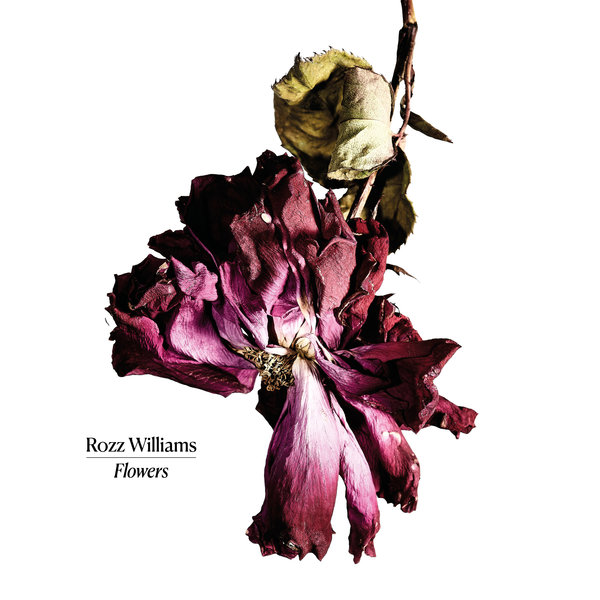
On July 23rd, Cult Epics quietly pressed a rose-pink twelve-inch to vinyl. Five hundred copies of the pink edition. On the cover, a dead flower, photographed in impossible detail — every fold of dried petal lit like a relic. Inside: a voice that stopped speaking in 1998, singing over instruments played by men who last stood beside it a quarter of a century ago.
The record is called Flowers. It is not, strictly speaking, new. But it is not old either. It exists in the strange present tense the scene it came from has always been comfortable with — built, from its first breath, on the idea that some things refuse to stay buried.
Around the same record, a documentary has been touring theaters since April: Rozz Williams: Romeo’s Distress, directed by Nico B, a filmmaker who was, before he was anything else, Rozz’s friend. New York in July. Pomona at the end of August, where Rozz Williams was born Roger Alan Painter in 1963 — a homecoming, of sorts, with surviving members of Christian Death playing behind a stage full of guest vocalists. Two screenings at L’Étrange Festival in Paris follow in September — the 7th and the 12th, both paired with Pig — with further dates in North and South America, then Toulouse before the year is out.
What follows isn’t a review — the film hasn’t reached us yet, and won’t for some time. It’s an attempt to understand, from the outside and slightly ahead of it, what it means to spend twenty-five years building toward telling one friend’s story — and why the person who knew Rozz Williams best has spent just as long deciding what not to say.
A Friendship, 1993–1998
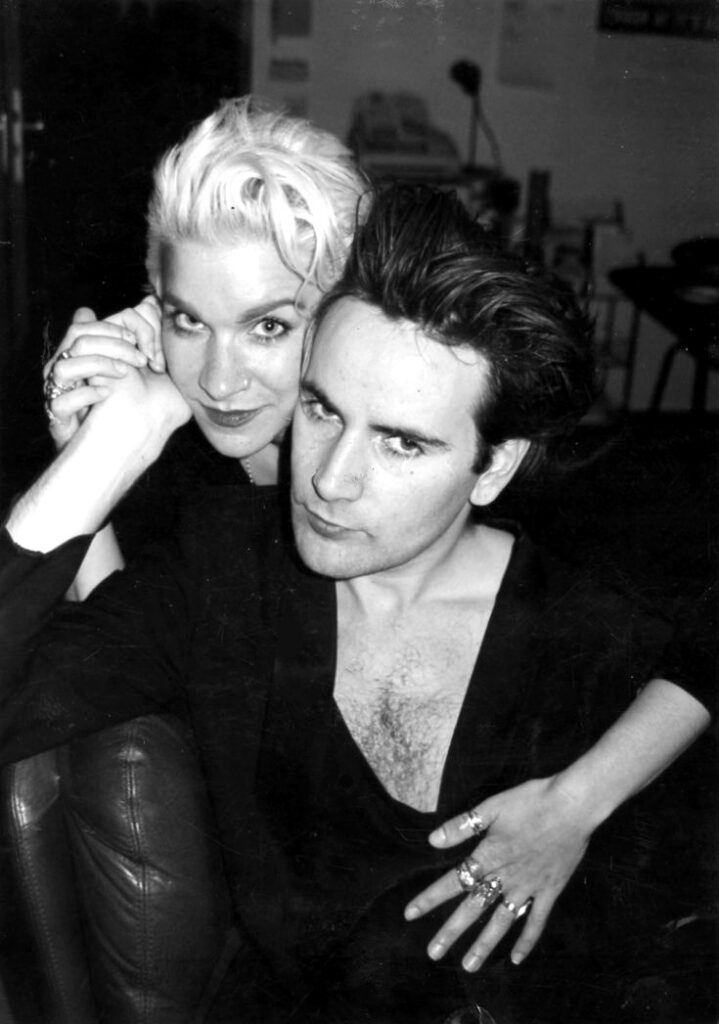
The two men met backstage in Germany in 1993, introduced by Gitane Demone, with whom Nico B was living in Amsterdam at the time. Long before any of that, though, there was a childhood in a house full of dead animals — his brother Larry recalls Rozz’s father running a home taxidermy operation, skins of foxes and coyotes hung by the hundreds along the fence. Whatever else shaped the imagery Rozz would later build a career from, it didn’t come from nowhere. As Larry puts it, Roger clearly wasn’t going to be a trapper — he was already on his way to becoming Rozz Williams.
What began as an introduction turned into a working relationship within the year: Nico B suggested to Rozz’s manager that Demone open for him on his 1994 European tour, and somewhere in the months of shared road and shared stages, the two became close enough that Nico B became his tour manager in fact as well as in name.
It was during this period that they went into the studio together — the sessions that became Dream Home Heartache, recorded in Belgium with producer Ken Thomas, at a studio belonging to Marc Ickx. Nico B and Gitane Demone were already close with Ickx; she’d recorded her Demonix album at his home studio a year earlier. Going there again was, in Nico B’s words, only natural — and a three-country tour followed directly from the same sessions. Two more tours came after, in 1995 and 1996.
The friendship deepened after Nico B relocated to Los Angeles with Demone in 1997. When the relationship ended, he found himself spending nearly every day with Rozz — a closeness that produced, before the year was out, a short film: Pig, a silent surrealist horror piece the two made together, with Rozz on the other side of the camera as well as in front of it.
By early 1998, the editing was finished. Nico B was happy with the seventh cut. So, by his account, was Rozz. What the film lacked was its soundtrack — recordings existed, but the work of finishing them was still ahead when Rozz Williams took his own life in April of that year, at thirty-four. It fell to Chuck Collisson, a longtime collaborator of Premature Ejaculation, to take what Rozz had left behind and mix it to the image. Pig, released later that year, is complete. It was never the unfinished project people assume it to be.
Not a Sequel, Twenty-Five Years Later
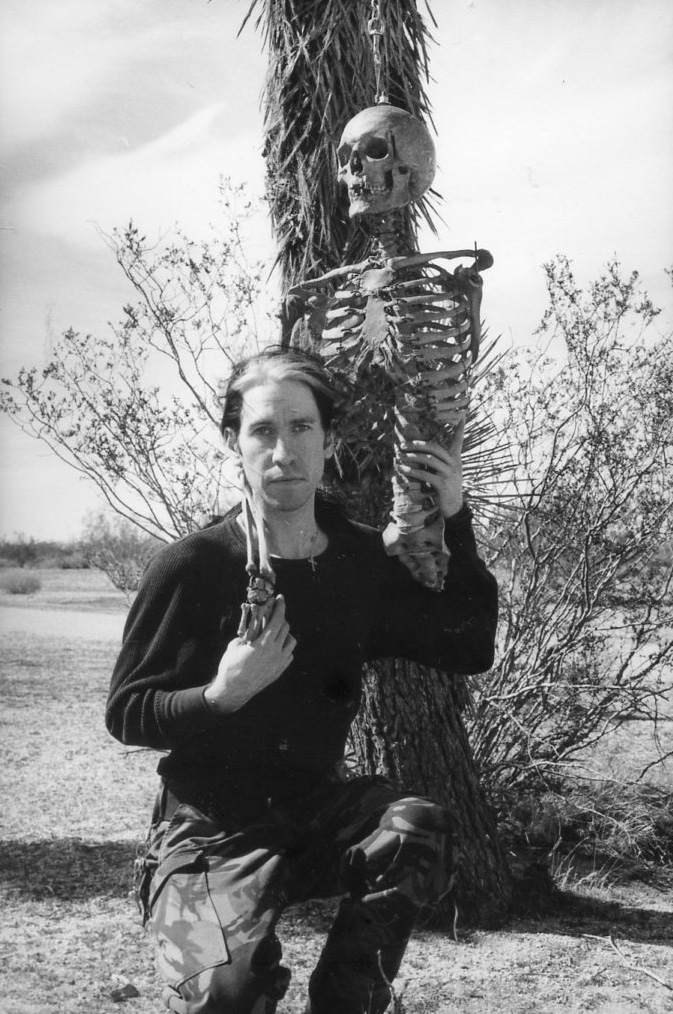
Romeo’s Distress did not begin as a documentary, and its director insists it wasn’t made to complete anything Pig had left undone — the two projects, in his account, occupy entirely separate places in his mind.
Its actual beginning was smaller and stranger: punk photographer Edward Colver kept turning up with pictures of Rozz that Nico B had never seen. The resulting oversized photo book, Only Theatre of Pain — Photography by Edward Colver, required interviews with the band members of that era — interviews Nico B decided, almost as an afterthought, to film. Historical record-keeping, nothing more.
It stayed that way until Jill Emery — of Shadow Project, and before that the Asexuals, Rozz’s first band — said, mid-interview, the thing that changed the project’s shape: why don’t you do a documentary? Nico B says he didn’t want to. What eventually convinced him wasn’t the idea of more interviews, more people telling Rozz’s story secondhand. It was the opposite instinct: that a chorus of other voices, however well-meaning, still wasn’t enough. He wanted Rozz to talk.
That desire produced one of the film’s more unusual formal choices. Where accounts from different interviewees contradict each other — as they reliably do, over twenty-five years, filtered through grief, memory, and the simple fact that everyone remembers a room differently — Nico B says he chose to let the contradictions sit side by side in the edit, rather than smoothing them into a single official version. It’s a principle that could have come from Rozz himself: a line from Pig holds that all truth is parallel, and therefore all truth is untrue.
Flowers, Found
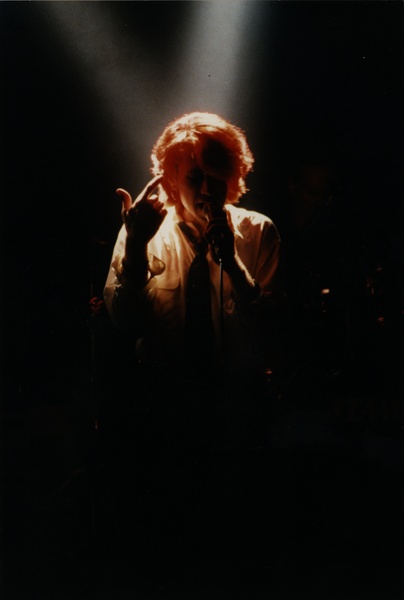
Long before the documentary existed, Nico B wanted to hear “Flowers” as a full rock ballad — the way Rozz had performed it live on his 1994 tour, backed by a band rather than alone. Williams had been planning, in what turned out to be his final year, to record an album with Tom Wilson, the original producer of Only Theatre of Pain. That session never happened. What survived instead were live tapes, some of Rozz’s own recordings, and years spent searching for a studio master that never turned up — the Belgian engineer who’d worked on it had lost track of the original tapes even after leaving the studio behind.
The eventual recovery came through audio separation software, not artificial intelligence — Nico B is specific on that point. The first attempt tried to match Rozz’s Dream Home Heartache vocal to the new band recording, but the tone didn’t fit; the studio version had been sung slower than the up-tempo arrangement the band was now playing. So Paul Roessler isolated the live vocal instead — and where Rozz forgot lines, as he sometimes did on stage, the missing words were filled in from the Dream Home Heartache take.
The band was recorded separately and in sequence: David Glass laid down drums first, James McGearty added bass at his own home studio, then Roessler and Rikk Agnew each came in to finish their parts, with Roessler mixing it all together over the course of more than a year.
The live shows that followed the film’s premiere weren’t originally planned. Nico B says the idea came out of a conversation with David Glass, going through something difficult in his own life, who mentioned wanting to play again. Why don’t you get the band together, Nico B told him — and when the documentary premiered in Los Angeles this April, they did, joined onstage by Eva O and Gitane Demone, with Patrik Mata on vocals and Rikk Agnew, James McGearty, William Faith and Kenton Holmes on instruments, running through songs from Only Theatre of Pain, from Catastrophe Ballet, from Ashes.
The Myth and the Man
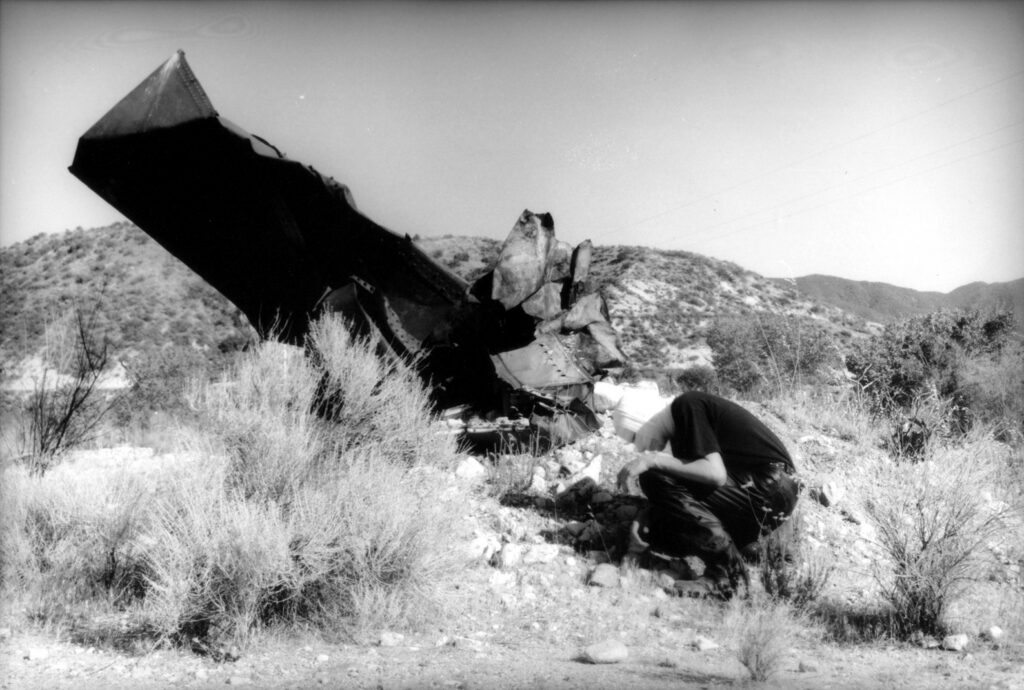
Ask Nico B whether making a documentary risks feeding the very mythology it sets out to examine, and he doesn’t dodge the question. Williams is worshipped by fans now, he says plainly — to the point that some people speak as though they’d known him, despite never having been in the room. He draws a clear line between those people and the ones who actually were: family, bandmates, the people who made music with Rozz or simply loved him, the ones he chose to interview and the ones he didn’t, for reasons of his own.
The private Rozz, in his account, bore little resemblance to the performer — vulnerable, shy, warm with the people he let close, in ways that rarely made it past the stage persona. Myths are created usually by strangers, he says, after someone’s death.
It’s a tension the film doesn’t fully resolve, and by its director’s own account, isn’t meant to. Even at more than one hundred minutes — already trimmed down from a cut thirty minutes longer, material Nico B says may surface later as outtakes — Romeo’s Distress isn’t a film with something missing. It’s deeply personal and about the work at the same time. A deeper cut exists in progress, one that moves further into the poetry and the art, with no date and no promise it will ever be finished or released.
What he won’t do, he says, is go digging through a private life that, as he puts it, is nobody’s business. Some of what Rozz shared with him would be more disturbing than anything people currently imagine — and putting it on screen would say nothing about the work. He’s not alone, he adds, in knowing things he doesn’t intend to say.
Out of Reach, On Purpose
Near the end of his answers, unprompted, Nico B reaches for a comparison: we never really knew Bowie as a person either, and I don’t think he wanted us to. It’s offered as a general point, not one Rozz ever drew himself — but it lands close to home all the same.
Twenty-five years after a silent film he couldn’t finish in time, and a song whose master tape took just as long to resurface, Nico B has built two objects — a film, a record — that both insist on the same thing: that the voice is real, that the friendship was real, and that some part of the man will stay exactly where he chose to keep it. Out of reach, on purpose.
Rozz Williams: Romeo’s Distress is written, produced and directed by Nico B, with cinematography by Christian Mariotti and editing by Eric Nicolas Smit, produced by Cult Epics.
The Flowers 12-inch (Cult Epics, CE310) features Rozz Williams on vocals, Rikk Agnew on guitar, James McGearty on bass, David Glass on drums and Paul Roessler on keyboards. Mixed by Paul Roessler at Kitten Robot Studios, mastered by Maor Appelbaum, produced by Nico B. The A-side carries the 2026 analog mix; the B-side pairs the piano version from Dream Home Heartache with a live take from Sleeping Dogs, both remastered in 2026. The pink vinyl edition is limited to 500 copies.
Sleeve photography by Darrell Wagoner, sleeve design by JMG Studio. Poster photography by Jennifer Finch. All other photographs courtesy of Nico B and Cult Epics. With thanks to Nico B for answering our questions from a film set in the Philippines.
Text © Ian Joy, licensed under CC BY-NC 4.0. Artwork and photographs reproduced by permission, all rights reserved to their respective holders.