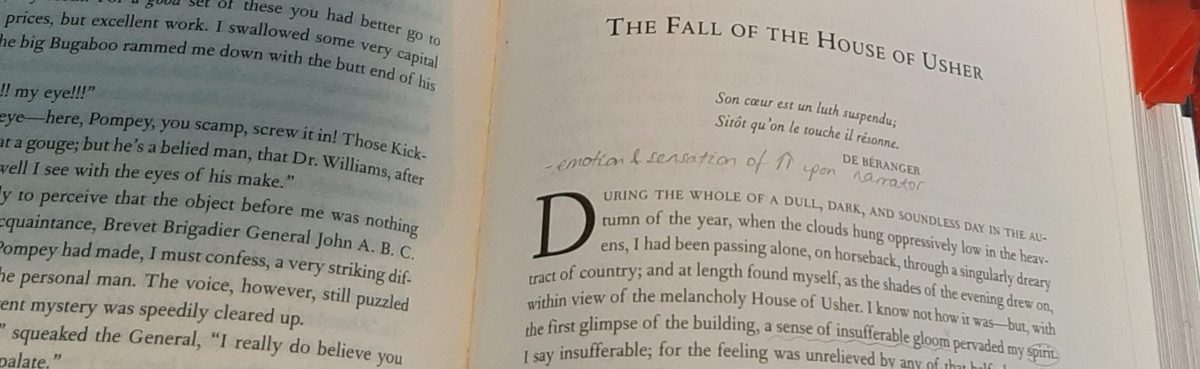
Southern Gothic Foundations: ‘The Fall of the House of Usher’
This essay examines Southern Gothic literature through Edgar Allan Poe’s seminal 1839 short story ‘The Fall of the House of Usher,’ initiating a month-long reading series on the Southern Gothic subgenre. The author explores how geography shapes American Gothic expression, particularly how the American South functions as a regional repository for societal irrationality and transgression that Enlightenment ideology cannot accommodate. Teresa Goddu’s critical framework is employed to contextualize the American Gothic’s distinctly Southern characteristics. The piece introduces four foundational texts from the Southern Gothic canon to illuminate thematic evolution, stylistic conventions, and defining indicators of this distinctly American gothic mode. Poe, himself Southern-born, anchors the discussion as a Great American Gothic figure whose work exemplifies how place, atmosphere, and psychological decay intersect within regional gothic expression. The essay facilitates communal reading with accessible free PDF sources and weekly critical discussions across platforms.
Original article published on Generally Gothic — AI-generated summary.