The Hudson River School’s American Apocalypse
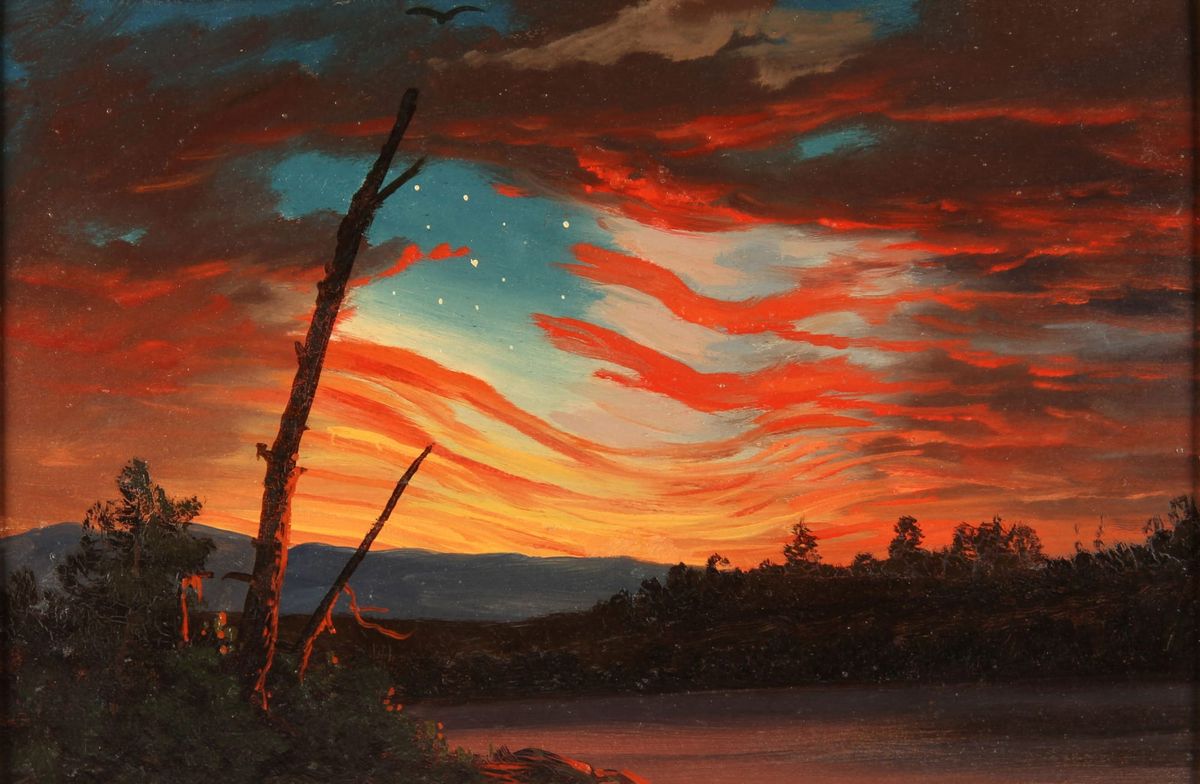
An essay examining the Hudson River School as a foundational American artistic movement that articulated anxieties surrounding industrialization, imperial expansion, and ecological degradation. Thomas Cole’s 1826 painting Kaaterskill Falls, displayed at the Wadsworth Atheneum in Hartford, Connecticut, marked a deliberate rupture from European academic portraiture conventions and colonial aesthetic modes. Executed from his Cedar Grove studio overlooking the Catskill landscape, the work employs Romantic sublime principles—drawing from Edmund Burke’s philosophical framework—to render a dramatic natural vista where cascading water, autumnal foliage in ochres and deep reds, and an encroaching dusk create an atmosphere of turbulent grandeur. Cole’s compositional strategy, positioning the viewer within the rock shelter behind the falls themselves, established a prototype for landscape painting as a register for national anxieties rather than mere topographical documentation, transforming American wilderness into a vehicle for expressing concerns about civilization’s trajectory.
Original article published on Hyperallergic — AI-generated summary. Visit the website to read the full article at the source. Image via Hyperallergic.