The Last Of Us: Post-War Anxiety In The Birds At 60
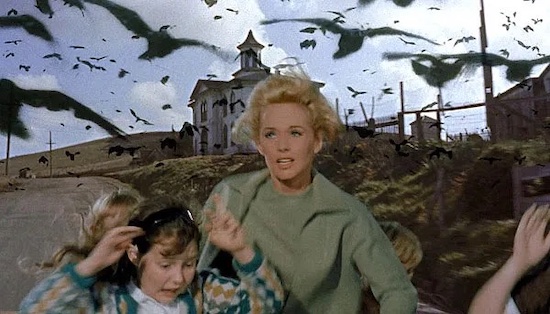
This retrospective examines Hitchcock’s 1962 adaptation of Daphne du Maurier’s short story as a reflection of post-war anxieties spanning two decades. The article traces how the narrative evolved from commentary on Britain’s WWII experience—specifically the trauma of the Blitz and civilian vulnerability to aerial bombardment—into a Cold War parable addressing nuclear paranoia and societal fragmentation. Set in Bodega Bay rather than the source material’s Cornish coast, the film captures American unease during the Cuban Missile Crisis, channeling fears of apocalyptic annihilation through seemingly random avian attacks. The critic argues that Hitchcock’s vision oscillates between romance and horror, depicting civilized society’s veneer stripped away to reveal underlying class tensions and moral culpability. The director’s implicit moral stance suggests humanity’s complacency deserves catastrophic consequences, a distinctly bleak perspective emerging from Eisenhower-era anxieties surrounding McCarthyism, Vietnam deployment, and nuclear brinkmanship.
Original article published on The Quietus — AI-generated summary. Read the full article at the source.