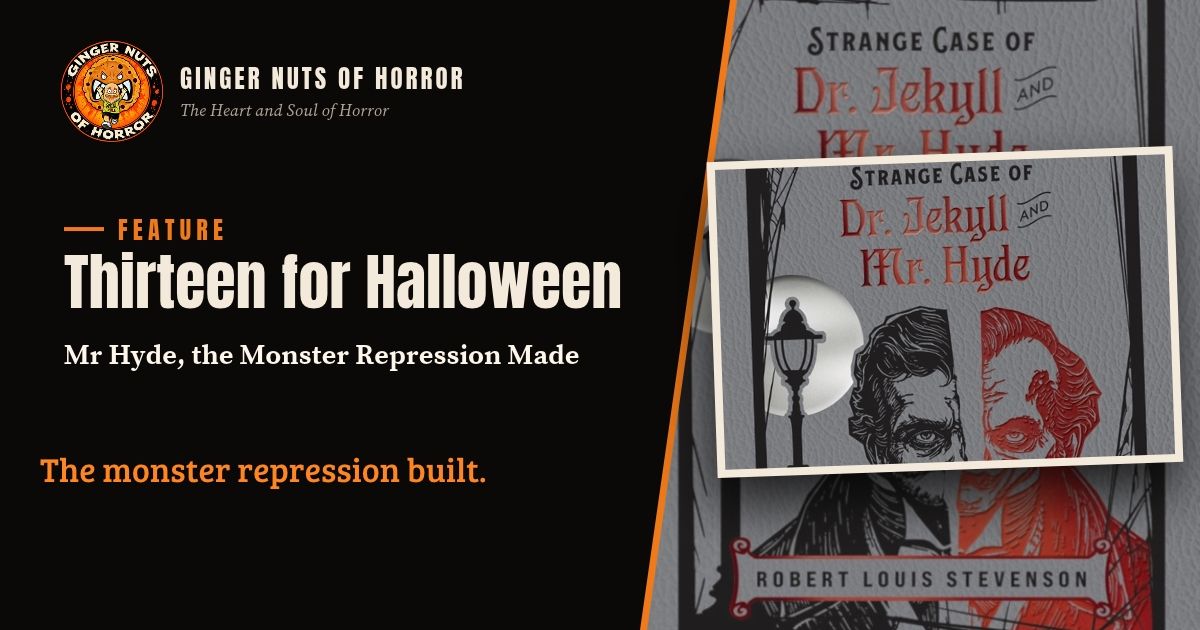
Thirteen for Halloween: Mr Hyde, the Monster Repression Made
George Daniel Lea argues that Mr Hyde in Robert Louis Stevenson’s Strange Case of Dr Jekyll and Mr Hyde is not a literal monster but a product of Victorian repression. Unlike film adaptations depicting Hyde as a grotesque creature, the novel describes him as a plain, unremarkable man whose monstrosity is symbolic. Lea contends that Hyde represents Jekyll’s repressed “unclean appetites” that he fears would destroy his social status if revealed. Rather than a separate consciousness, Hyde is Jekyll with cultural constraints removed—the id operating without the restrictions of shame and propriety that define Victorian society. The murder of an upper-class gentleman exemplifies Hyde’s rage against the paternalistic structures that have confined Jekyll. Ultimately, Hyde embodies how societies that deny sincere desire through stigma and shame breed their own monsters, making him a manifestation of cultural sickness rather than innate evil.
Original article published on Ginger Nuts of Horror — AI-generated summary. Read the full article at the source.