Not an Escape
OTTOMAN GRÜW, Mutant Modality, and the argument for listening
by Ian Joy
People tell him what his music is for. He has heard it often enough to repeat the line back: you make industrial techno, so it must be escapist music.
He doesn’t dismiss the whole idea. He grants the transcendent part: the ritual of hearing something very loud alongside other people, the dancing, the gestures, reaching for something larger than ourselves. He has felt all of it. But he refuses the conclusion. What happens in a dark room at three in the morning is not, in his account, a way out of the world.
That argument runs underneath everything Ivan does as Ottoman Grüw, and it turns out to have a bibliography.
Learning to uncompartmentalise
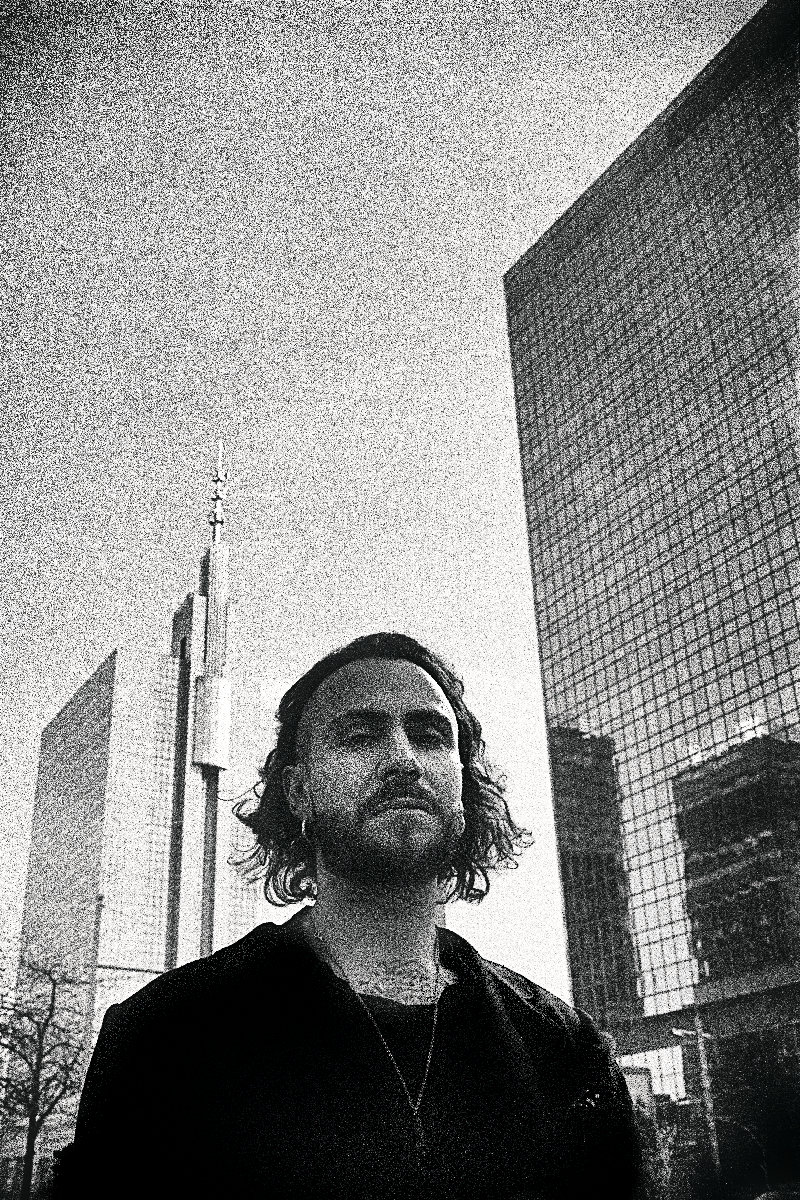
He is French-Italian. Part of his life in Italy, then France, which he left with a specific complaint: a conservatism he felt in both social attitudes and the art scene, combined with a wish to look further out. Montréal was still francophone, which helped, but that isn’t why he went.
What drew him was a way of working he had not seen before. In Montréal he found people who refused to stay inside one discipline. Someone in the techno scene would also be making ambient, also doing research at a university, also have a practice in bio-art, also turn up in improvised music or post-punk. Nobody seemed to treat these as separate careers.
He describes a scene with no load-bearing walls, and it is the closest thing he has to a method.
Everything after Montréal follows from it. He came back to Europe because the scenes he cares about sit close together here; in North America the distances are too large, and this is an urban music that thins out between cities. He arrived in Brussels in late 2022. It was central, he already knew a few people, and the Belgian legacy in alternative music was, he says, plainly among the reasons to come.
Four projects
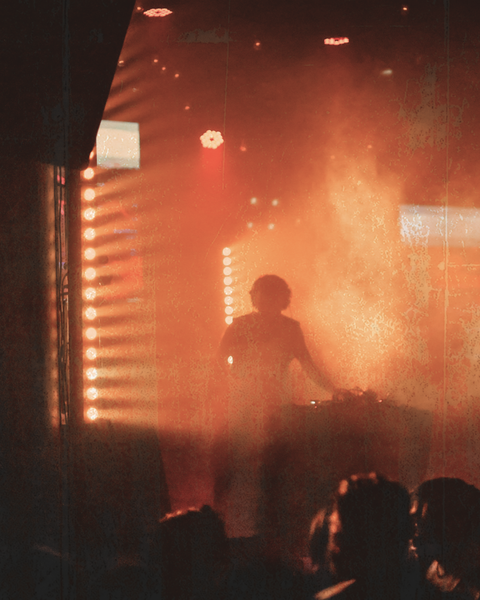
OTTOMAN GRÜW started in Paris in early 2017, as a duo, and continued as a solo project once he reached Montréal. The name means nothing at all. There is no Ottoman Empire in it — it is an anagram built from the letters of two people’s names. He seems pleased that nobody agrees on how to pronounce it: everyone says it their own way, and that suits him.
His stated motivation was not a sound he wanted to make. His musical training was, by his own description, rudimentary — he had done several things, none for very long — and the project was, above all, a blank page for experimentation.
Since then the experiment has divided into rooms. A Body Without, a duo, released its first EP this year on the Berlin label Aufnahme + Wiedergabe, with a remix by Orphx — a pairing he clearly enjoys, since Orphx were among the first to fuse the genres he works between. Theatre Of Light is his ambient, drone and experimental folk project; its first release is a live recording made in the chapel of the Grand Hospice in Brussels, and he is pushing the next one further into the studio. And there is Gruppo Automatico, which so far amounts to a DJ mix and no official release: an Italian anagram of OTTOMAN GRÜW, made to explore what he calls, laughing, the brighter side of dark music.
Ambient is not a sideline here. When he names a strong influence, it is the one he names.
A label as a room for other people
Mutant Modality, which he runs with the visual artist NVDP and, for the past year or so, with the Brussels DJ Monstera Occulta, released its first record in November 2023. In under three years it has put out records, curated event series in Brussels, Berlin, Montréal and Athens, and kept up regular radio broadcasts on Operator in Rotterdam and on Kiosk and Gimic in Brussels.
The catalogue splits three ways, and the split is legible in the reference numbers. The V series was compilations — various artists, concentrated in the label’s first year, currently on pause. The X series is for music that is not club music: ambient, non-rhythmic forms of noise. The M series, the largest, is the club-facing one.
The compilations were a statement of range. Mutant Modality is not organised around a genre, he says, but around certain aesthetics pursued across several genres belonging to the same broad family of dark, industrial, experimental, techno-adjacent music. Having shown the range, the label moved toward individual EPs and LPs, often by artists who first appeared on those compilations. The aim is deliberate: to make artists communicate across geographies and across genres.
The word he keeps returning to is community, and he is explicit about why. He thinks the sense of cohesion between people is somewhat broken, in a period he describes as complicated on many levels. Building something around artists who share an idea of dark, cathartic, experimental music strikes him as worth doing.
NVDP handles the visual direction, all textures and 3D and sculptural alien forms; Ivan drives the sound.
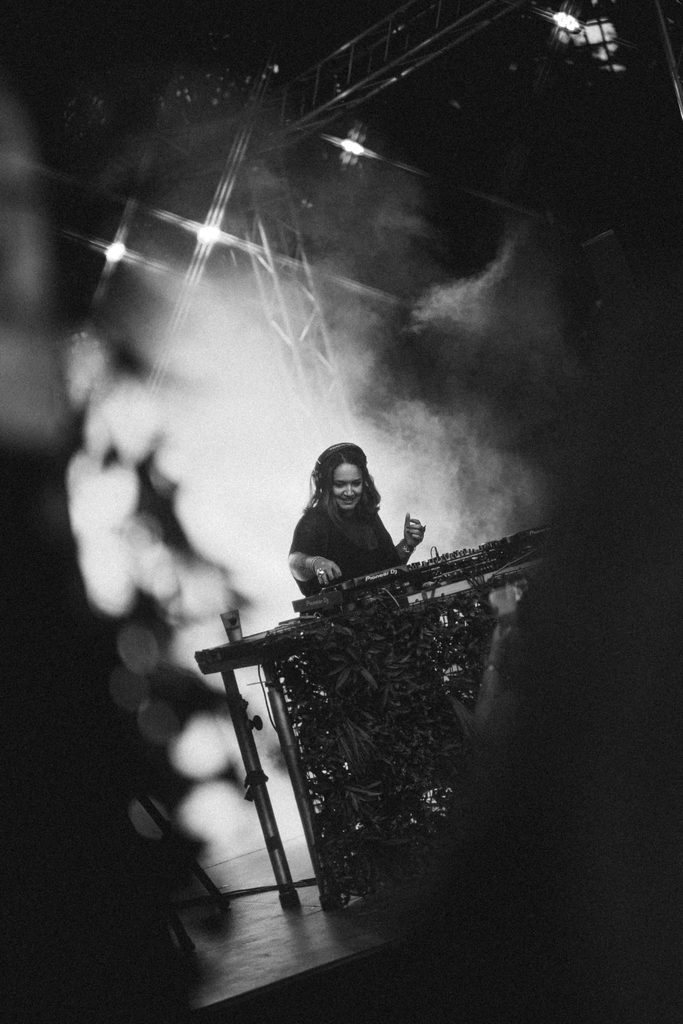
Monstera Occulta joined more recently, which solved a geographical problem: NVDP lives in the Netherlands, and Ivan wanted someone in Brussels. They met two years ago through Alix Van Ripato, after one of her sets at Kiosk Radio, and got on immediately — humanly and musically, as she puts it. When Ivan suggested she help curate some of the label’s events, she took it as a chance to try something she wasn’t used to. She is careful about the scope: she works on the line-ups for some of the nights, and what she brings to them, in her words, is her own small post-punk touch.
Her background is not in dark electronics. She came from SWANA music, Arabic disco, and she is also a fan of black metal and gothic music — but she rejects the idea that these are separate rooms she moves between. A real music lover, she says, doesn’t recognise musical borders. She listens to a lot of post-punk, and she is actively looking for artists from the SWANA region playing it. It’s all connected. What Mutant Modality gives her is somewhere to let the darker side of everything she loves do the talking.
Other Voices — the newsletter
Get the best of coldwave and post-punk in your inbox, once a month. No noise, no spam.
Frequencies, and what makes them subversive
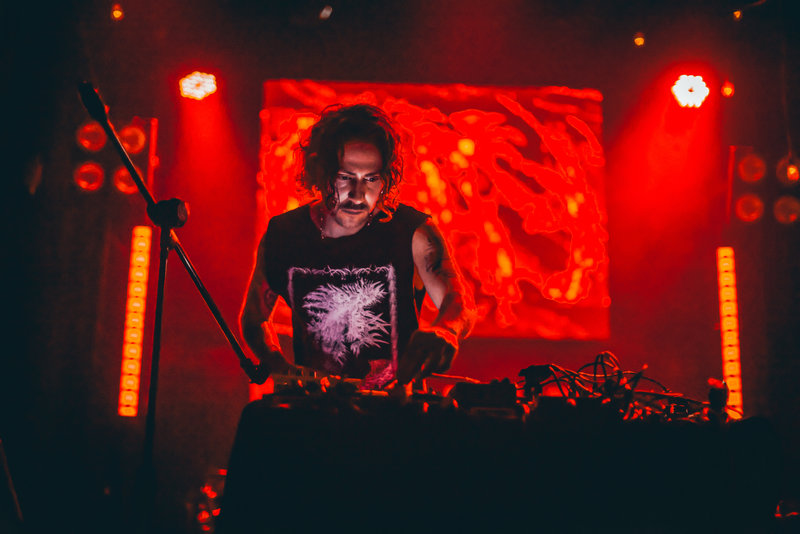
The label describes itself in terms of subversive frequencies and decadent journeys, and both phrases turn out to be doing real work.
Decadent, he explains, is meant in the sense of falling — something that falls, that decomposes. It connects to speculative fiction, a branch of science fiction that pulls in biology and other sciences and treats fiction as a way of imagining the future while staying anchored in the real. That anchoring matters to him. The label draws on those aesthetics because they are deeply rooted in this period, rather than offering a way out of it. Irreversible change, not fantasy. Mutant Modality’s own founding text asks what might happen if the wreckage of modernity, beneath its ruins, turned out to offer the chance of new possibilities.
The subversive frequencies take longer to explain, and this is where the conversation stops sounding like a label interview.
His reference is Pauline Oliveros, the American experimental composer and researcher who developed the practice she called Deep Listening. What interests him is the idea that a deep, sustained attention to everything around us — people, fauna, flora, the whole environment — might produce something like respect for it, and from respect, a wish to preserve it. This is not a reference he reached for in conversation: Oliveros closes the label’s manifesto, quoted on the subject of music expanding consciousness, of old patterns being replaced by new ones. Mutant Modality is built on her.
From there he goes to acoustic ecology and R. Murray Schafer, the Canadian composer who carried out part of his research at Simon Fraser University in Vancouver. Schafer studied the sound of environments as a way of archiving the destruction of ecosystems: as industrialisation and urbanisation degrade a landscape, its sonic richness thins out and flattens. Ivan is careful with the word nature, which he considers a human construction. But the argument holds without it. In studying the standardisation of a soundscape, you are also studying a decline in the wellbeing of the people and the planet inside it.
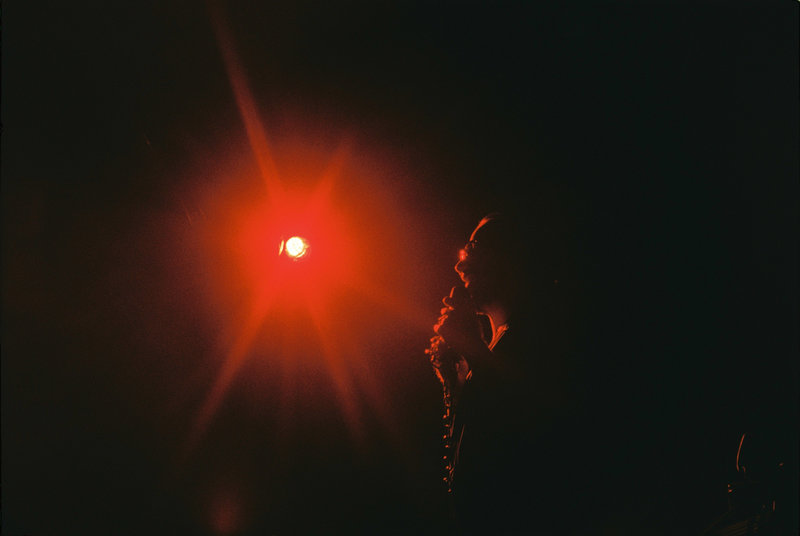
He hears this in ambient, unsurprisingly. He also hears it in the electronic music he makes and likes — something enveloping, concerned with detail and texture inside the sound.
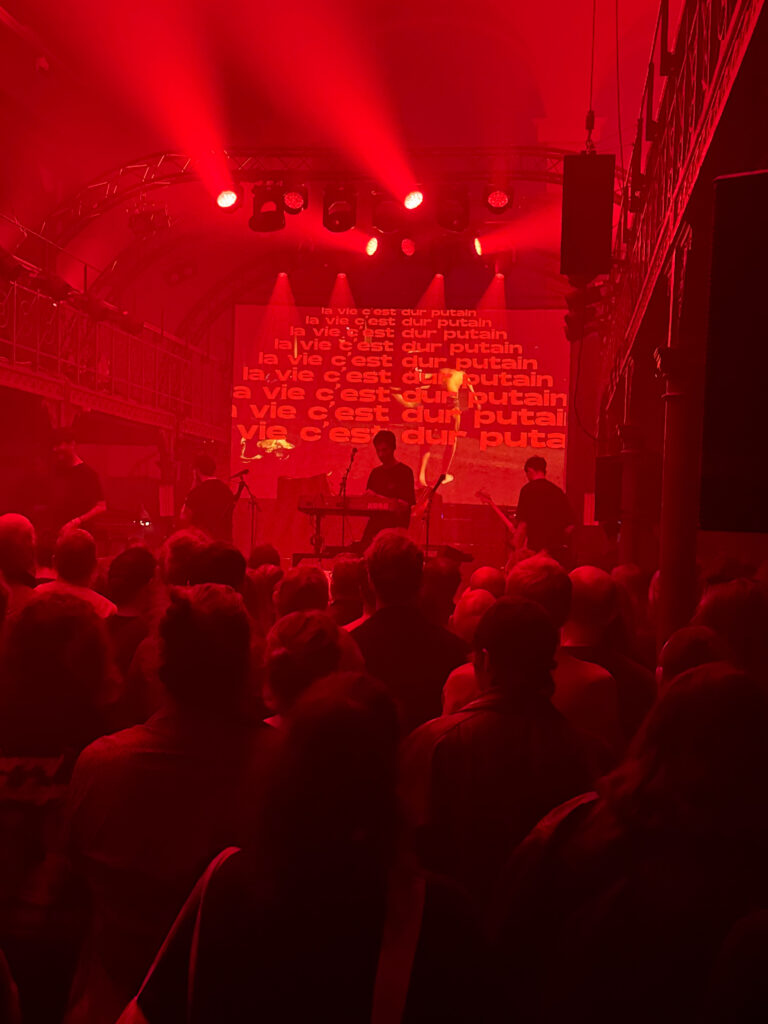
Since 2025 the argument has become visible as well as audible. His live sets now carry immersive projections: kaleidoscopic landscapes of fire and sulfur, drawn from three decades of photographic work on volcanoes around the world by the photographer and filmmaker Olivier Grunewald. While he talks about soundscapes thinning out, the screen behind him shows the planet at its most elemental.
Asked what set all this off, he answers without hesitation. Montréal. A community that was politically engaged and refused to keep its practices apart.
The room itself
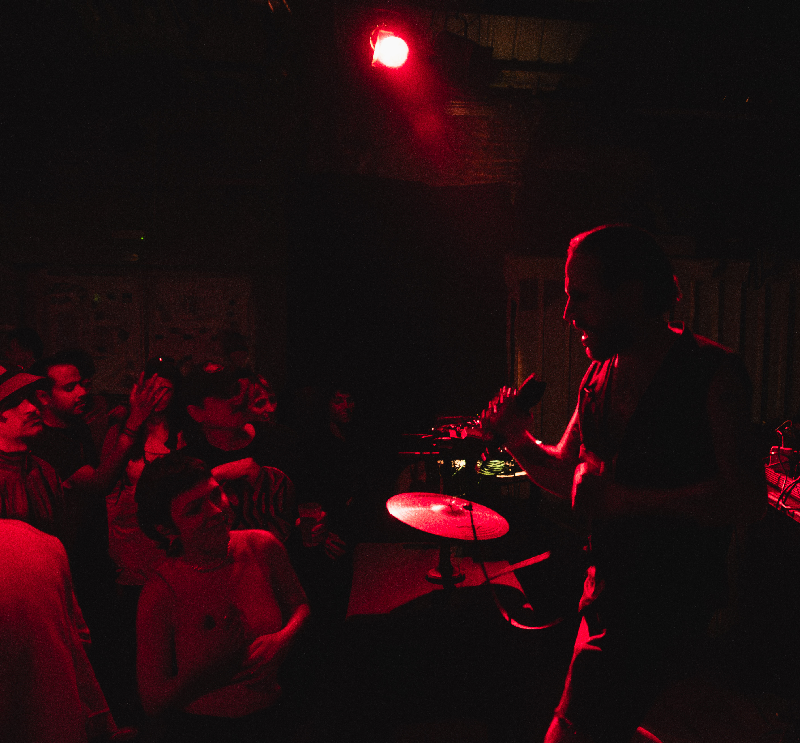
Which is where the escapism argument returns, and finishes.
He is not sentimental about nightlife. He grants that it can be criticised on numerous grounds and does not argue the point. But one thing about it seems to him unassailable: it lets us witness the existence of people we would not otherwise meet. And if you take two seconds to consider who those others are — strangers going through the same experience at the same moment — it might amplify your capacity for empathy and tolerance, and over time contribute to rebuilding some sense of collectivity.
He is also candid about economics. For an artist in this genre today, income comes from events rather than from selling music, and he has no illusions about it.
Last Halloween, Mutant Modality took over the Beursschouwburg in Brussels. The invitation came from the venue, which decided a label working in dark music suited the night; Ivan and Monstera Occulta put the line-up together. It sold out. The performances were very different from one another, he says, and cohesive anyway.
This year, on 31 October, the venue has invited them back with one condition. The 2025 programme was heavy on live sets, and for a night running that late it proved demanding for the technical crew. So this edition will be DJs only — a change he has decided to treat as an opportunity. Live sets require sustained concentration, and they interrupt: one act stops, another begins. Eight hours of DJing produces something else. At some point, he says, you enter a kind of trance carried by mechanical rhythms answering each other and folding into one another. There will be no gaps. And the venue’s technical staff, he adds, will be grateful.
Monstera Occulta, who works on the line-up, describes the same night from the other end — not the effect but the craft. The job is to put the right person on at the right moment, so that the atmosphere builds gradually and each artist gets to play a selection that actually suits them. Reka, Kim Peers, DJ Lovepills, Carmilla Sioux and Monstera Occulta herself are on the bill, with Ivan playing b2b; doors at 22:00.

East
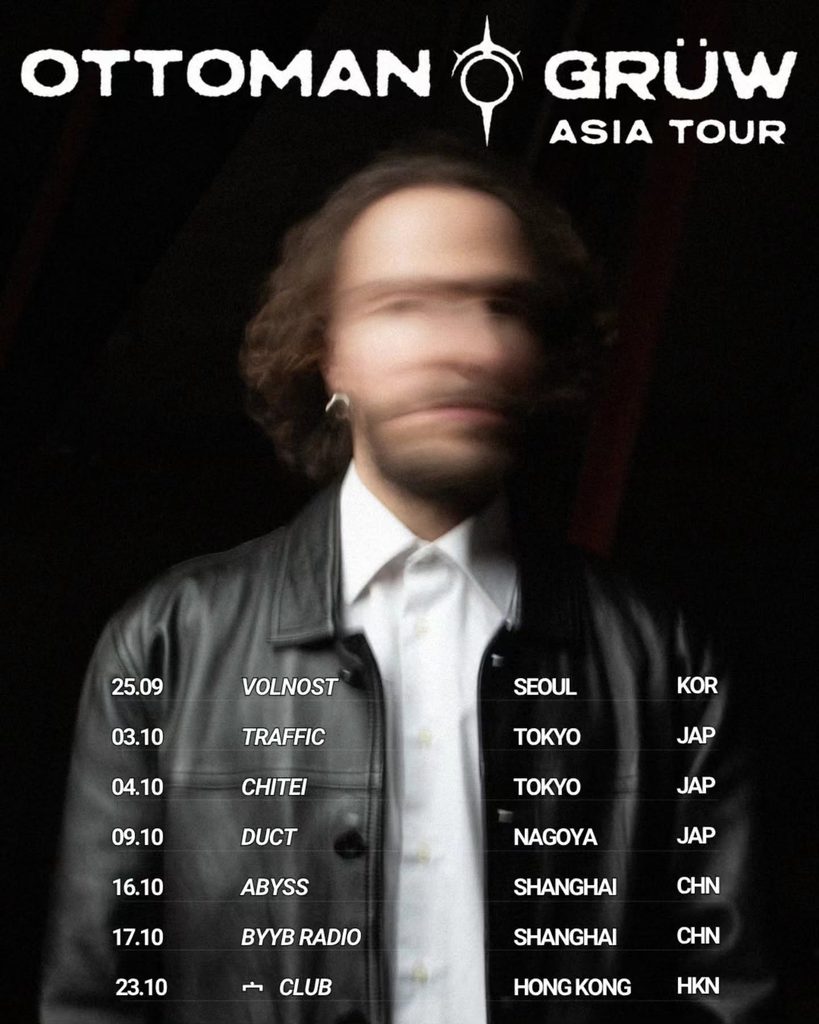
His first Asian tour opens on 25 September in Seoul and runs until 23 October in Hong Kong, by way of Tokyo, Nagoya and Shanghai.
He is not going to export anything. What interests him is that the scene there differs in some respects from European ones and that this music — dark, industrial, electronic — exists anyway. He assumes plenty of European and Western artists play those rooms. He is more curious about the local artists working in the same forms, and about the way their own culture gives them a distinct sonic identity, the same genres rendered through a different cultural perspective.
He offers a theory about why any of this is possible, and it is the least escapist thing he says. Making relatively niche music means the niche exists everywhere. He is never going to play a stadium. But in almost any city on earth there will be some number of people drawn to something darker and more cathartic — and if you involve yourself in those scenes, people notice, labels ask you for compilation tracks and mixes, and years later, when you finally feel ready to tour, you already know who to write to.
They are happy to have you.
Interview conducted in Brussels, 28 August 2026. Translated from French.
Tour poster and event flyer courtesy of Mutant Modality. All images remain the property of their respective rights holders.
Text © Ian Joy / Catastrophe Ballet, licensed under CC BY-NC 4.0.