From Semtex to SpaceX
Thirteen years on, Oppenheimer MKII trade the bomb for the exploding launch pad
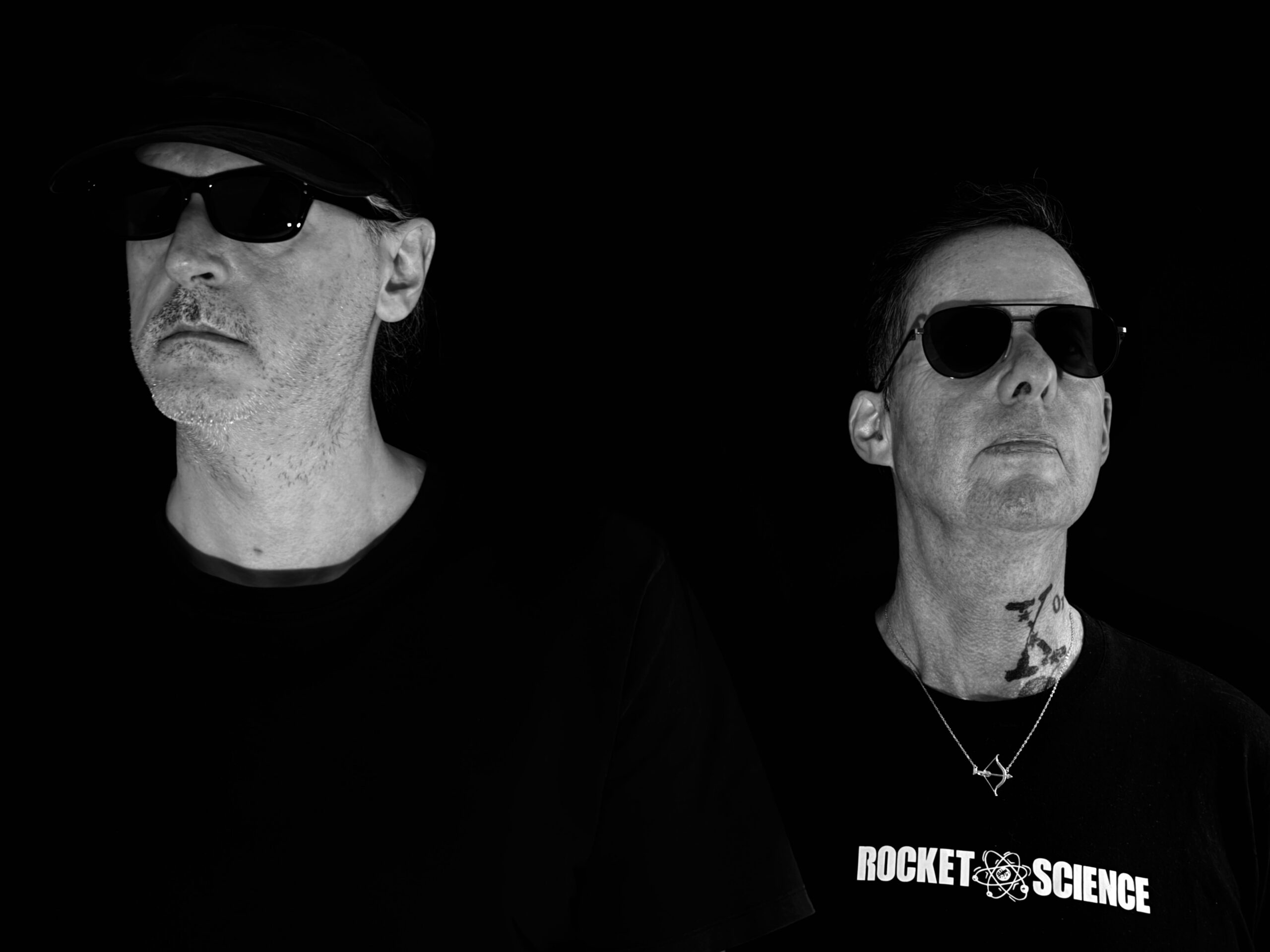
Oppenheimer MKII are two men who arrive at synth-pop from opposite ends of the dark.
By day, Andy Oppenheimer is a UK-based counter-terrorism and CBRNE specialist — chemical, biological, radiological, nuclear and explosive threats — who has edited several defence and security journals.
Mahk Rumbae comes from the harder, colder end of electronic music: a British-born, Vienna-based producer and musician whose CV runs through Mitra Mitra, Codex Empire (plus new project Codex Futura) and the veteran cold-industrial outfit Konstruktivists. Put Rumbae’s thunderous, machine-tooled production under Oppenheimer’s clipped, theatrical vocals and you get Embrace the Dark — the duo’s second album, out now on Wave Tension Records, and their first in thirteen years.
The Devil’s Dancers, forty years on
“‘The future’s here, said the pioneer, there’s room at the top…’ it was about more than nuclear,” he says.
“It was about science and tech bros taking over the world. And you can dance to it.”
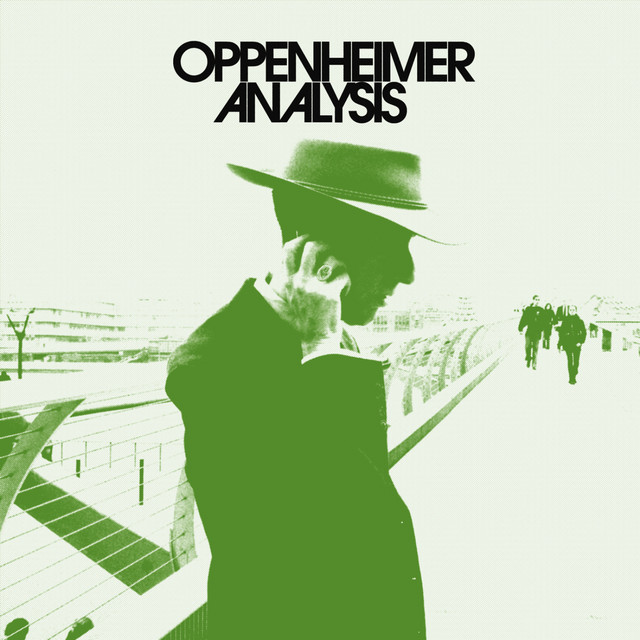
To understand where Embrace the Dark is aiming, you have to go back forty years. In 1982, Andy formed Oppenheimer Analysis with Martin Lloyd, recording a clutch of songs onto a home-taped cassette called New Mexico — a tiny, DIY run made at the height of the Cold War and the home-recording boom, and never properly released at the time. It became a collector’s grail. Two decades later, one of their songs, The Devil’s Dancers, was chosen to inaugurate New York’s Minimal Wave label, and it has been played and danced to ever since. Andy is quick to point out that people have been misreading it for four decades.
That last line is the whole method in miniature. Whatever the theme — apocalypse, domination, the men who would own the future — Andy insists on a tune you can move to. It’s a principle that runs unbroken from that Battersea cassette to the record he’s just made: the darkness is the subject, but the dancefloor is non-negotiable.
Not the atomic angst you’d expect

Here’s the trap a lesser writer would fall into: a man named Oppenheimer, who spent twenty-five years consulting on bombs and CBRNE threats, releases an album called Embrace the Dark — so of course it’s about the mushroom cloud. Oppenheimer heads that reading off at the pass.
“I’m not doing the Atomic Angst thing on this new album,” he says, “save for the final track — No Warning.”
Even that one is slippery. No Warning is dystopian, but deliberately unfixed: it could be a bomb, or an asteroid strike, or any apocalypse you care to name. He wrote an alternative, near-utopian ending for it — humanity leaving Earth to find other worlds — before deciding the bleaker version suited the record better. The rest of the album looks elsewhere. When The Presence of the Abnormal appeared in 2013, he points out, the title wasn’t doom-mongering at all — it’s bomb-disposal jargon for a suspect device, picked up from the demolition crews he was working alongside at the time.
He’ll concede that nuclear dread is having a moment again — “atomic angst is back in fashion… fission,” he offers, unable to resist the pun — but he’s clear that the real dystopia has moved on. The anxieties driving this record are the ones we actually live with now: artificial intelligence, climate collapse, and the men who’d like to profit from both.
The tech bro Bond villain

I Went Too Far is the song Andy is proudest of, and the one where his taste for dangerous personae comes fully into focus. On it, he plays a villain — a very specific, very contemporary one.
“I’m roleplaying a very famous, infamous tech bro Bond villain,” he says. “Anyone with access to the internet will know who that is. Mentioning no names.”
He doesn’t have to. The character sings himself into being through his appetites — “I’ll get to Mars, I will reach the stars… my wealth is infinite” — a man for whom personal fortune and cosmic destiny have become the same thing. Over four minutes, Andy takes him from a flicker of despair to the dizzy heights of total domination, and the music climbs with him: Rumbae’s production turning grandiosity into something you can feel in your chest.
The detail that makes the song is the ending. Andy watched Starship Flight 10 explode on the pad last June and wrote I Went Too Far soon after; in the song, he sings a countdown but cuts himself off just before zero — the launch that never comes. Life has kept rhyming with it since. On 16 July, he notes, Starship Flight 13’s launch was aborted at the last second, its engines cut just as they lit — the countdown stopped short, exactly like the song.
None of it is played entirely straight. Andy runs a parody account of the same figure on Bluesky — “the woke version of X,” as he puts it — and the tongue never strays far from the cheek. But the joke has teeth. The album’s own press coverage has zeroed in on the same target: a tech magnate who mistakes personal wealth for manifest destiny.
From Semtex to SpaceX

The reason Andy can write that villain so convincingly is that he’s spent his whole life on both sides of the rocket — the part that lifts off and the part that goes bang. He puts it more neatly than any biographer could.
“Rockets to bombs, then back to rockets,” he says. “I’ve gone from Semtex to SpaceX.”
Semtex — the malleable plastic explosive best known as the IRA bomb-makers’ weapon of choice — was, as it happens, the subject of his first book. The arc is real.
He’s been steeped in science fiction and space since childhood, as was Martin Lloyd, and in the early 1980s, around the time he met Lloyd and formed Oppenheimer Analysis, he was working at Omni, the glossy science-and-sci-fi magazine that specialised in imagining the near future.
“Everything we did at Omni is coming true, or has happened,” he says, and it’s hard to argue.
Then came the other career: twenty-five years running a defence consultancy doing, in his words, “anything that goes bang.”
Now semi-retired from all that, he writes science-fiction thrillers — and has circled back to the rockets he started with.
The through-line is performance. Andy is a self-described actor who gravitates to big, world-changing characters, and the influence he names is the obvious one for anyone who’s heard that clipped, theatrical delivery: Bowie, the cracked actor, the showman who could inhabit a villain without ever quite dropping the wink.
It’s what lets him play a Mars-bound megalomaniac for four minutes without the song curdling into a lecture.
The best one yet
For all that Andy is the voice and the persona, Embrace the Dark is a two-man machine, and he’s the first to say the machinery is Rumbae’s triumph.
“Mahk has done the most amazing, thunderous dance rhythms,” he says. “I think it’s the best album I’ve done.”

It’s a fair claim. Rumbae — the man from Konstruktivists and Codex Futura, schooled in the colder, harder end of electronics — turns out to be the ideal foil for Oppenheimer’s theatrics, building arrangements muscular enough to carry a Bond villain and supple enough to stay pop. The early press has heard it too: premiering the video for lead single Oh, My Mind Is A Storm, White Light // White Heat read the track as a study in loneliness and sleeplessness — the tyrannical thoughts that surface when a mind goes dark and waits out the night, set to surgical drum patterns and a hypnotic, warbling bass.
That tension — dread you can dance to — is the thread running all the way back to that Battersea cassette, and it’s why the record lands the way it does now, in a moment when the future feels less like a promise than a threat. Whatever else it is — satire, séance, warning shot — Embrace the Dark keeps Andy’s oldest rule intact. The darkness is the subject. The dancefloor is non-negotiable.
Embrace the Dark is out now on Wave Tension Records.
Oppenheimer MKII live:
27 August 2026 —
Säule, Berghain, Berlin (KEYI Magazine) — tickets
12 December 2026 —
LAUT, Barcelona (La Industria Metalúrgica, with Codex Futura and Modulecrown) — tickets
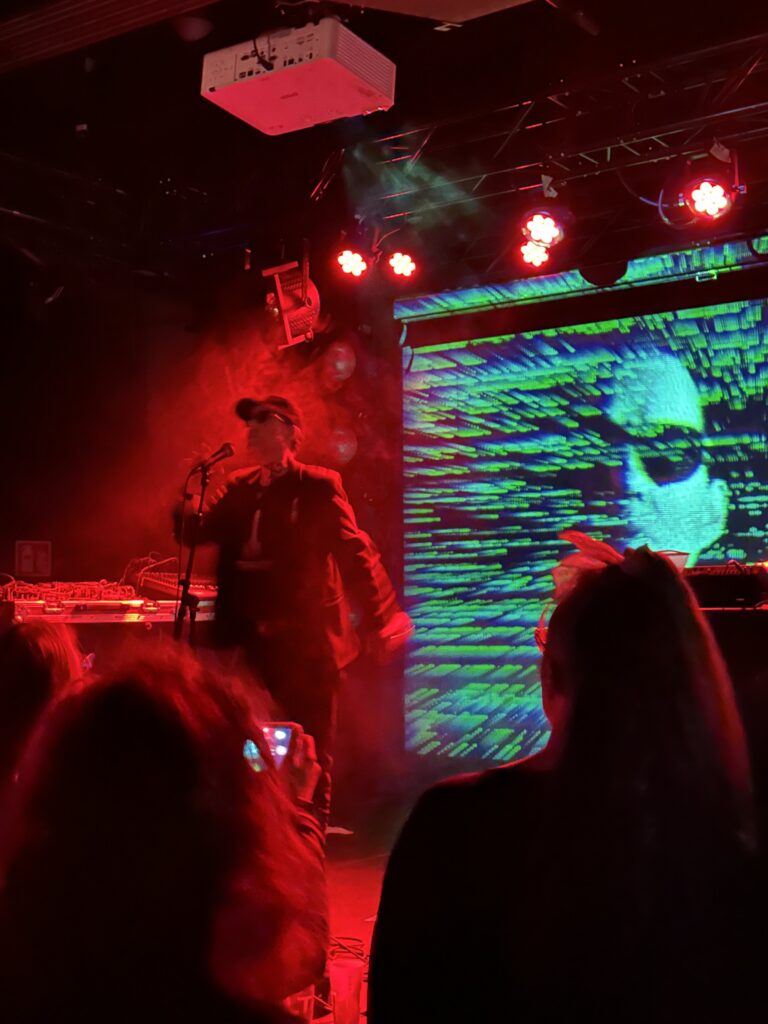
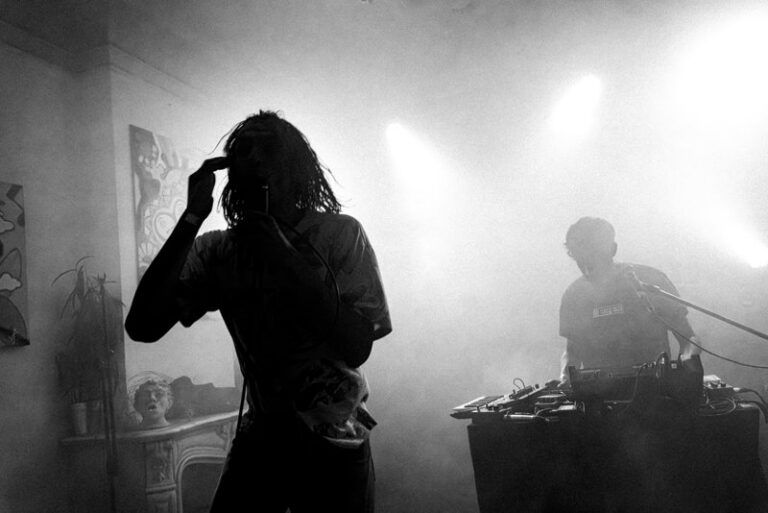
Photos courtesy of Andy Oppenheimer, © Oppenheimer MKII; live photo taken at Kult, Helsinki, 8 May 2026.
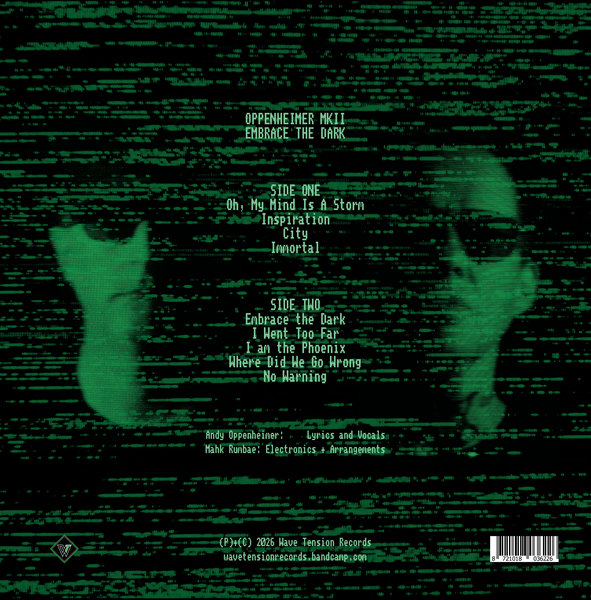
Embrace the Dark cover design by Mahk Rumbae, © Wave Tension Records.
Oppenheimer Analysis artwork © Minimal Wave.
Album artwork reproduced for review purposes.
Text © 2026 Ian Joy / Catastrophe Ballet, licensed under CC BY-NC 4.0.