Preserving Common Food as a Defensive Strategy: the Ghorfas of Southern Tunisia
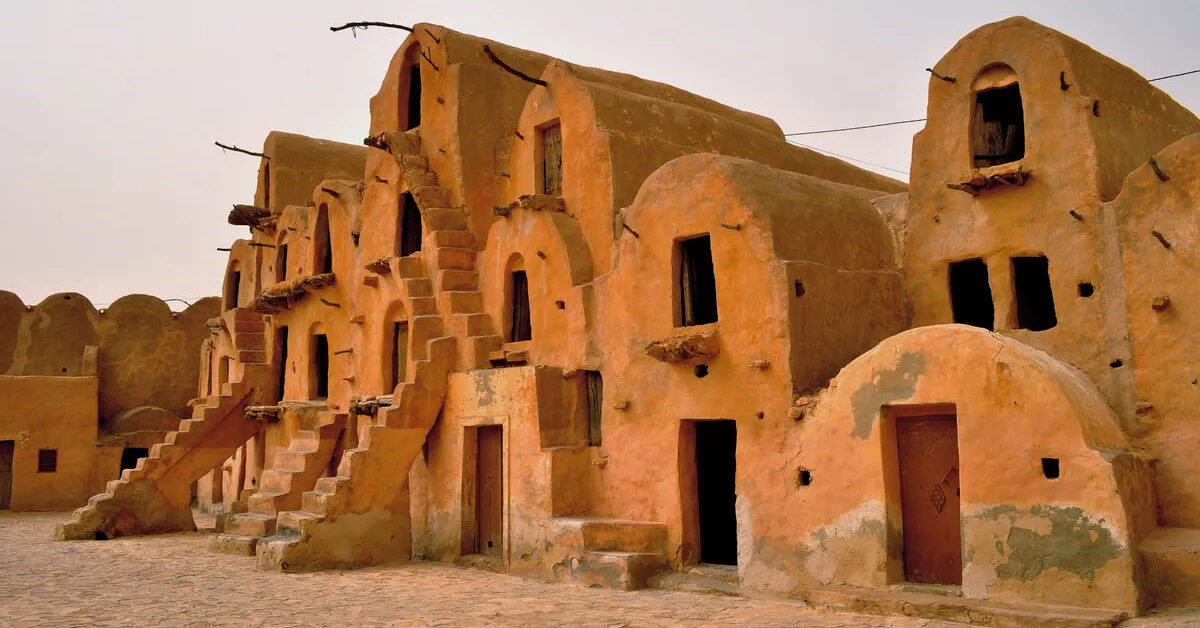
Ghorfas are barrel-vaulted granary structures indigenous to southern Tunisia and parts of Libya, traditionally built by Berber communities as food storage facilities and subsequently adapted for residential purposes. Each chamber measures approximately 4–5 metres in length and 2 metres in height, employing vernacular construction methods suited to arid climates. These austere, fortress-like adobe or stone vaults represent a pragmatic architectural response to environmental scarcity and resource protection, embodying defensive spatial logic through their geometric severity and subterranean or semi-subterranean positioning. The structures exemplify how functional architecture can acquire an austere, almost brutalist aesthetic through necessity rather than ideology, their repetitive, cellular forms creating a monumental yet humble visual register aligned with vernacular modernism and decline aesthetics.
Original article published on Socks Studio — AI-generated summary. Visit the website to read the full article at the source. Image via Socks Studio.