Control, I’m Here
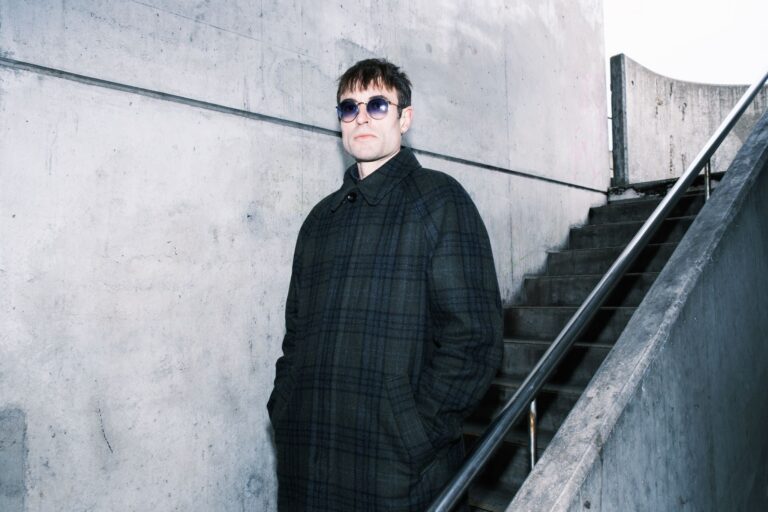
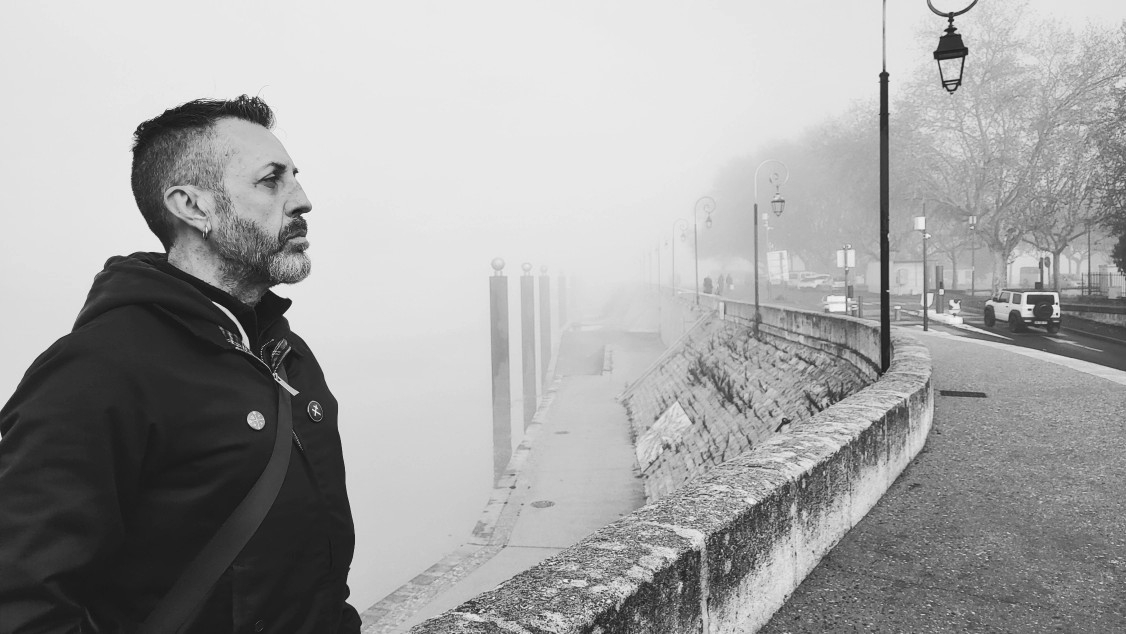
an independent portrait of Pedro Peñas Y Robles
In September, Pedro Peñas Y Robles goes back on air with British Connection to talk, once again, about a book that won’t quite let him go. What the appearance doesn’t advertise is the longer story underneath it: an art school graduate turned DJ turned label owner turned author, who spent four decades making sure nobody else got to write the terms of his own account of things — not an art school, not a publisher, and not even, in the end, the men whose music he loved most.
A Director’s Prophecy
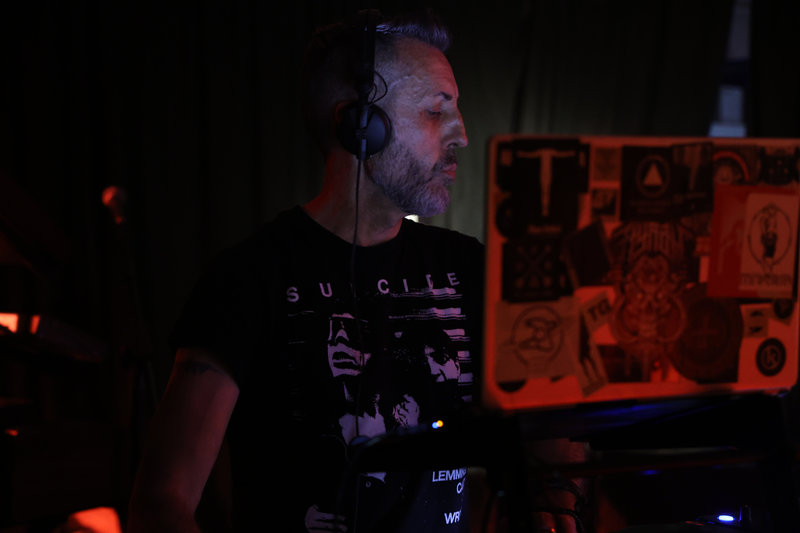
Ask Pedro where the habit of doing everything himself comes from, and he doesn’t start with a record label. He starts in an art studio in Avignon, sometime around 1990, where he’d squatted his workspace night and day, developing his own photographs in his own darkroom, refusing to fall in line with classmates he considered talentless but well-connected enough to coast into galleries and teaching posts anyway. In his fourth year, the director called him in and expelled him — not without a parting remark that has clearly stayed with Pedro for over three decades: that whatever else happened, a personality like his would manage on its own.
And he did. By September 1991 he had enrolled in literary studies instead. He’d already been DJing for three years at La Guinguette du Rock, a club between Orange and Avignon, working there as resident DJ to pay his art school fees — so the independence, in a sense, predates the expulsion that supposedly confirmed it. What the director’s remark did was name something Pedro hadn’t yet had to test at scale: an unwillingness, later inflexible, to let an institution set the terms of what he made or how he made it.
The following decade filled in the toolkit. Seven years running nights at Marseille’s Trolleybus club taught him sound, lighting, flyer design. In 2000, with no formal training, he bought a sampler and launched HIV+, his industrial project, borrowing the name from his own DJ alias. By the time he founded Unknown Pleasures Records in 2013 — named, unambiguously, after the Joy Division album — he was already used to being, as he puts it, “producer, graphic designer, web manager, mixer, singer, artistic director, distributor, promoter” all at once, out of necessity rather than ambition.
Writing came to him the way it comes to a lot of scene veterans: not by design, but by invitation. A collection editor at Camion Blanc, the French rock publisher, asked him to contribute to Paroles de Fans, a series with a fixed conceit — books had no individual titles, just an artist’s name, and fans’ testimonies rather than critical distance. Pedro wrote three: Joy Division, Nick Cave, Nitzer Ebb. He worked the format sideways where he could, seeking out musicians he admired rather than anonymous fans, so that the books became a chain of secondhand devotion rather than a chorus of the ordinary. But the shape wasn’t his. Even the covers weren’t fully his call.
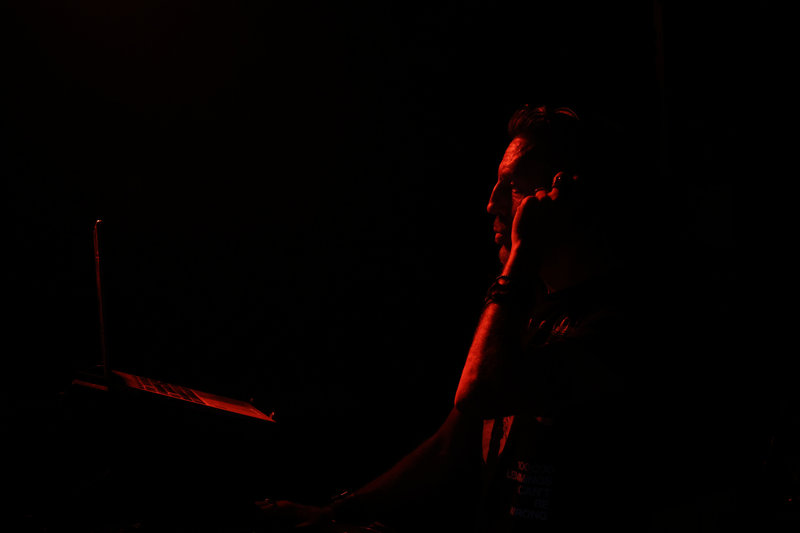
That mattered more than it might have to someone less proprietary about his own voice. Years later, once he’d left the collection behind, he’d describe his two solo dictionaries — one on new wave, one on techno — as a way of returning to what had always driven him: not criticism as institution, but transmission. “Je ne suis qu’un passeur,” he says. A carrier, nothing more. It’s a modest word for a man who has spent forty years insisting on doing the carrying his own way.
What the Cover Doesn’t Say
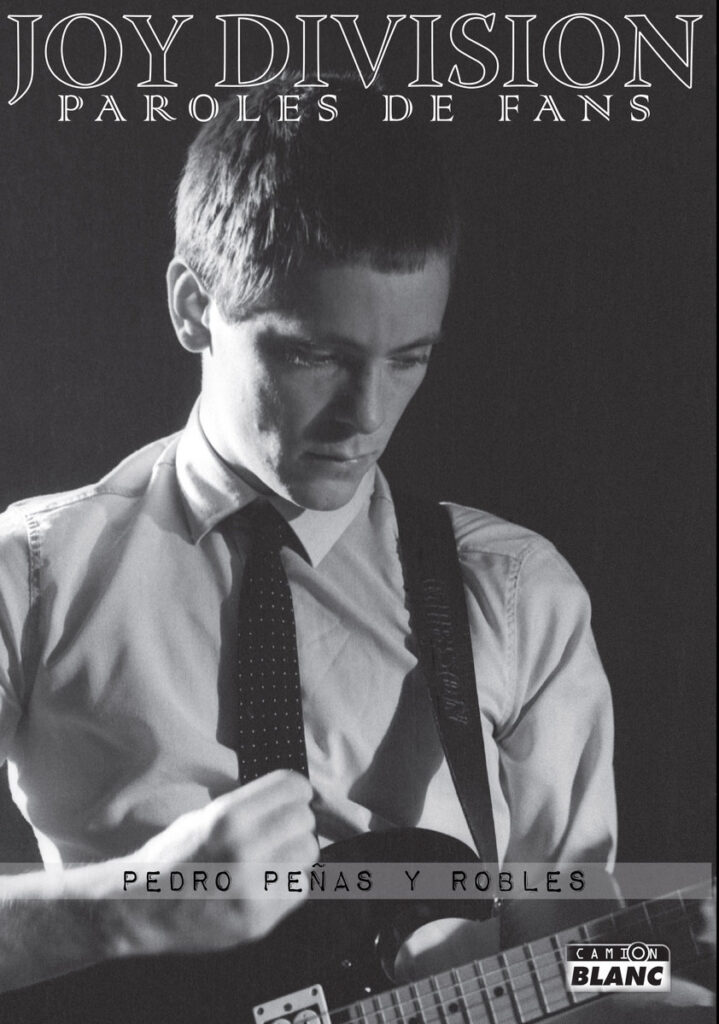
Bernard Sumner photograph © Philippe Carly — newwavephotos.com
The Joy Division book gave him his first real editorial decision, and he made an unusual one. Rather than another photograph of Ian Curtis — the image that has done most of the work of turning Joy Division into elegy — he asked photographer Philippe Carly for a portrait of Bernard Sumner from the Joy Division years specifically. Not New Order’s frontman. Joy Division’s guitarist, caught before the transition that would define him.
The reasoning, when he explains it, has nothing to do with diminishing Curtis. “Je n’ai pas voulu thésauriser sur la légende de Ian Curtis ni sur sa mort,” he says — he didn’t want to hoard, to profit from, the legend of Curtis’s death. Sumner, in his account, represents continuity rather than absence: “une forme de renaissance sous une autre apparence. Pareil mais différent.” He’s careful, too, not to let the point curdle into revisionism — Peter Hook and Stephen Morris remain, in his words, the band’s essential pillars, alongside producer Martin Hannett, and he credits Sumner’s synth work and famously thin, “rachitique” guitar tone with shaping the record’s particular sound regardless. It’s a small act of refusal, but a total one: even writing about someone else’s band, about someone else’s most mythologised moment, he wouldn’t accept the ready-made version.
The Book That Cost Him a Publisher
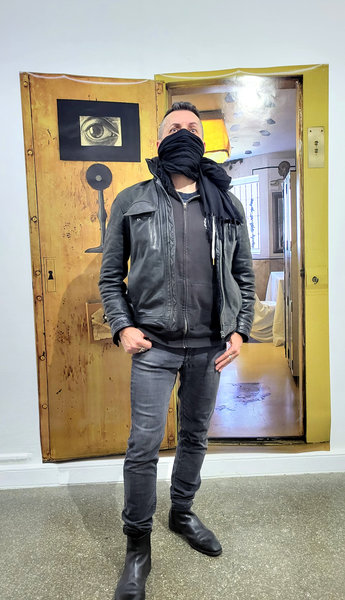
Not every act of refusal came at his own choosing. The Nitzer Ebb book — the third in the Camion Blanc trilogy — included personal material that a collection editor, by Pedro’s account, failed to properly vet before publication. The fallout reached his ex-wife, whose objections led to a settlement with the publisher and, not long after, word passed along that Camion Blanc no longer wished to work with him. The remaining French copies were pulped. What survives from the original run — some 150 copies sold before the print run ended — has become, in his own dry phrasing, “un pur collector.”
He doesn’t dispute his share of the responsibility. “Je ne peux en vouloir qu’à moi-même,” he says now — he can only blame himself — while noting that a more careful editor might have flagged what shouldn’t have gone to print. What he did next says more about him than the episode itself: rather than let the book disappear, he had it professionally translated into English — paying, pointedly, a fair rate for the work, in contrast to publishers who don’t — stripped of the paragraphs that had caused the harm, redesigned with what he calls a more classy layout, and reissued it himself through UPR. It sold five times what the French edition had. A friend at the Valencia label Industrial Complexx later proposed a Spanish edition too, restyled again, closer to Nitzer Ebb’s own sleeve aesthetic. The book that ended a publishing relationship became, in its own way, the proof of concept for doing without one.
Whatever complicated Pedro’s relationship to that book, his relationship to Nitzer Ebb’s music was never in question. When singer Douglas McCarthy died in June 2025, Pedro wrote the band’s obituary for Gonzaï himself — not a professional notice, but something closer to a eulogy, describing McCarthy’s voice as “celle d’une génération, la mienne,” a source of comfort and resolve across a lifetime of listening. Whatever the Camion Blanc episode cost him, it never touched what the music itself had given him. The English and Spanish editions of his biography remain in print through UPR; the French original, out of print since the falling-out, is the one that got away.
Ventablack

By the time he’d built Unknown Pleasures Records into a working label — now home to well over a hundred releases — the same instinct that had gotten him thrown out of art school had become an actual editorial method. He describes his early signings in purely aesthetic terms: an artist like Hausfrau, a Glasgow art student whose Nico-inflected, Lynchian record he found himself drawn to on instinct alone. “Pas de sectarisme, pas de plagiat, pas de caricature ni de théâtralité exagérée,” he says of what he looks for — “que du minimalisme, de la beauté et de la tension, un peu comme le ventablack, ce noir si profond qu’il ne réfléchit aucune particule de lumière.” A black so total it reflects nothing back.
Over time, the label’s reputation started pulling artists toward him rather than the other way around. Dirk Da Davo of The Neon Judgement brought his Neon Electronics project, made with Glenn Keteleer, to UPR for “Ne“, what Pedro still calls one of its strongest releases. Kill Shelter — the Edinburgh-based project of a different Pete Burns, one who shares little beyond the name with the Dead Or Alive singer — found a home there too, its rhythmic debt to Prodigy carrying Sisters Of Mercy’s legacy somewhere new. Chris Shape brought a version of Bauhaus’s “Bela Lugosi’s Dead,” released as part of the Honoris tribute series UPR has developed album after album. None of it reads as a hobby anymore. It reads as a body of curatorial work with its own internal logic, run entirely on his own terms.
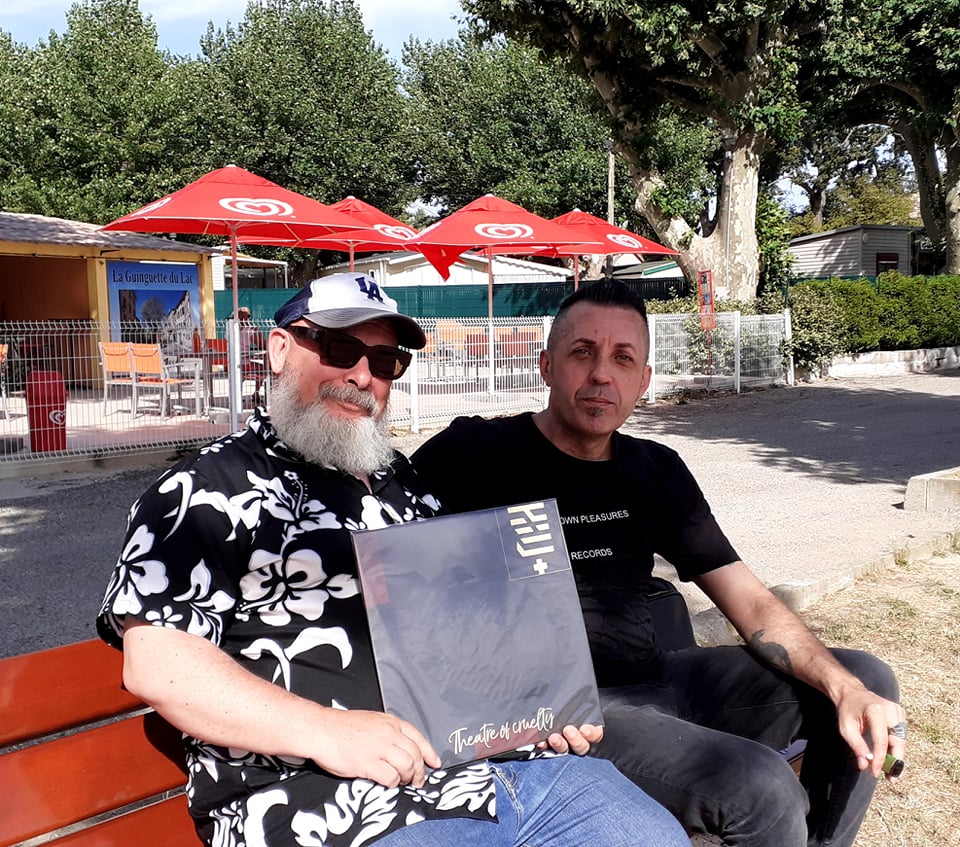
The same instinct runs in the other direction too, toward his own music rather than away from it. Under HIV+, the industrial project he’s kept alive since 2000, Pedro has pulled in collaborators most labels his size couldn’t: Marc Hurtado of the cult band Étant Donnés, and, on 2021’s Theatre Of Cruelty — an album-length homage to Antonin Artaud — filmmaker Marc Caro, co-director of Delicatessen and The City Of Lost Children, contributing disintegrated, radio-filtered vocals to two tracks. He also compiled the tracklist for Morbid Angel’s 2012 remix album Illud Divinum Insanus — The Remixes alongside Rose Vignat, credited on the release itself as “Compiled By [Tracklisting By]” — a curatorial role, not just one contribution among dozens. Curator or contributor, the guest list reads the same way either time: people he admired, brought in on his own terms.
Pedro with Marc Caro, co-director of Delicatessen and The City Of Lost Children, who contributed vocals to two tracks on HIV+’s 2021 album Theatre Of Cruelty.

Ask him what he’s reading, away from the label, and Pedro reaches for autobiographies before anything else — other people’s truths, told in their own words, by writers with an actual style rather than what he calls tired conformism. He’s rereading Philip K. Dick. He likes label histories — Factory, Mute, 4AD — for the same reason he likes autobiographies: he wants to know what a producer actually added to a sound, and he’ll track the answer down himself if he has to.
Some questions have never quite settled for him either. He traces his ear back to the early Eighties, when industrial music started raiding Dadaist collage and martial imagery for effect — provocation dressed as ideology, or maybe the reverse. He names Laibach, NON, Death In June, Throbbing Gristle in the same breath, and admits, without resolving it, that he’s never fully worked out where the joke stops and something else begins. History hasn’t judged the four of them equally — some cases are far better documented than others — but that isn’t really Pedro’s point. His point is that the question outlives easy answers, in this scene as much as in his own.
He’ll be back on British Connection in September, talking about a book that’s nearly four years old, still selling, still — by his own reckoning — the best-received thing he’s ever put his name to. Forty years in, the account remains entirely his to give.
The full interview, in French →
Text © 2026 Ian Joy / Catastrophe Ballet, licensed under CC BY-NC 4.0.
Bernard Sumner photograph © Philippe Carly — newwavephotos.com.
Artwork © respective artists/photographers, all rights reserved, reproduced with permission.